- EIB Global has committed €40 million through three Zambian banks to improve access to affordable finance for farmers and agricultural SMEs.
- EU backed risk sharing and technical assistance are helping financial institutions increase lending while supporting climate resilient farming practices.
- Investment in irrigation and modern farming equipment is enabling farmers to withstand drought, improve productivity and expand production.
Zambia’s agricultural sector is receiving a significant boost through a €40 million financing initiative that is helping farmers and agricultural small and medium enterprises strengthen climate resilience, improve productivity and expand their businesses.
The Zambia Agriculture Value Chain Facility, implemented by EIB Global with support from the European Commission, is addressing one of the sector’s biggest challenges by improving access to affordable long term finance for agricultural investment.
The programme comes as Zambia continues to recover from one of its worst droughts in more than two decades. The severe dry conditions experienced in 2024 reduced agricultural output while electricity shortages caused by lower hydroelectric generation disrupted irrigation and other critical farming activities.
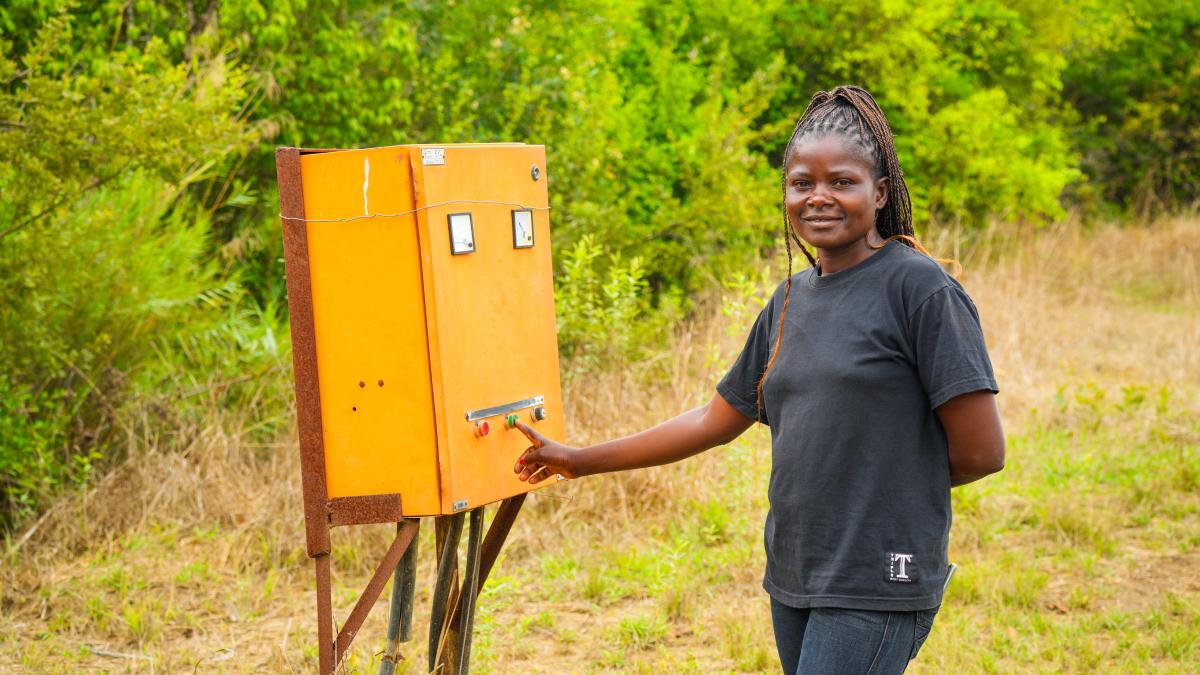
For farmers such as Joyce Nambeye, Farm Manager at Matuka Farm in Mkushi, the combined impact of drought and electricity load shedding created significant operational challenges.
“Some of the biggest challenges we faced were drought spells and load shedding,” said Nambeye. “We could not effectively farm and manage our crops. The crops would end up drying up or developing diseases.”
Limited access to affordable finance remains a major constraint for Zambia’s agricultural sector. Agriculture is widely regarded as a high risk industry, leaving many farmers and agricultural SMEs unable to secure financing or forced to borrow at prohibitively high interest rates.
The Zambia Agriculture Value Chain Facility is designed to bridge this financing gap by providing long term loans aligned with agricultural investment cycles while expanding credit access for businesses that would otherwise struggle to secure funding. The financing also supports investment in irrigation systems, agricultural equipment and climate resilient farming practices.
Among the beneficiaries are Matuka Farm and Galaunia Farm, which have used the financing to strengthen their operations.
“The critical thing for us was the nature of the borrowing, that we would be able to borrow in dollars,” said Mark Lacey, Managing Director of Galaunia. “We sell our wheat and soya in dollars and purchase some of our inputs and machinery in dollars. Access to dollar financing at a more competitive interest rate allows us to remain profitable, support our employees and invest in the local community.”
Since 2021, EIB Global has channelled the €40 million facility through Zambia National Commercial Bank, First Capital Bank and Zambia Industrial Commercial Bank to expand lending across the country’s agricultural value chain. Demand has been strong, with funds allocated through Zambia National Commercial Bank already fully committed.
The financing package is complemented by an EU supported risk sharing facility that reduces lending risk for participating banks. The guarantee encourages financial institutions to extend credit to smaller businesses and companies with limited collateral while attracting additional private sector investment into agriculture.
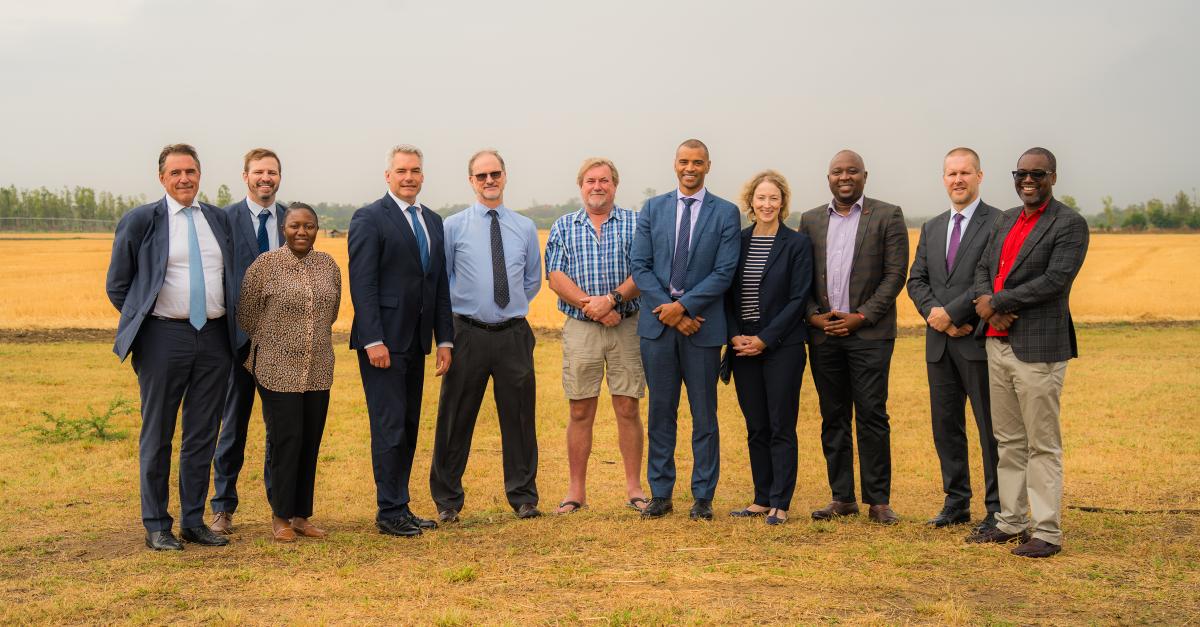
The EIB Team, including Charmaine (3rd left) during a visit to Galaunia Farm. Image credit: EIB
The programme also includes technical assistance funded by the European Union to strengthen the capacity of participating financial institutions while helping farmers adopt sustainable production methods and commercial farming practices.
According to Charmaine Lebese, Business Analyst at EIB Global, strengthening agricultural finance is critical to Zambia’s food security and economic development.
Smallholder farmers account for around 80% of Zambia’s agricultural production, while agriculture employs between 50% and 70% of the country’s workforce. Agricultural SMEs play an essential role in connecting farmers to markets, adding value to agricultural products and driving rural economic growth.
Lebese said several programme beneficiaries have already expanded production, with some exporting to European markets while investing in imported agricultural machinery, demonstrating the broader economic benefits of the European Union’s Global Gateway investment strategy.
The impact is already evident for businesses such as Amadeus International, which used the financing to expand irrigation infrastructure.
Managing Director Rajendra Patel said the investment had enabled the company to increase the area under cultivation and introduce double cropping.
“The funding has supported the setup of extra irrigation on the land, which has led to increased hectarage, and we can now do double cropping,” Patel said. “We are protected from drought during the dry season and this is driving increased revenue generation.”
Author: Bryan Groenendaal