- Kusile achieves full commercial capacity, adding 4.8 GW to the grid alongside Medupi.
- Project costs surge to over R160 billion, with combined overruns exceeding R300 billion.
- Persistent delays, design flaws and governance failures continue to shadow progress.
After more than a decade of delays and escalating costs, South Africa’s Kusile Power Station has reached full commercial capacity, marking a milestone for Eskom and the country’s efforts to stabilise electricity supply.
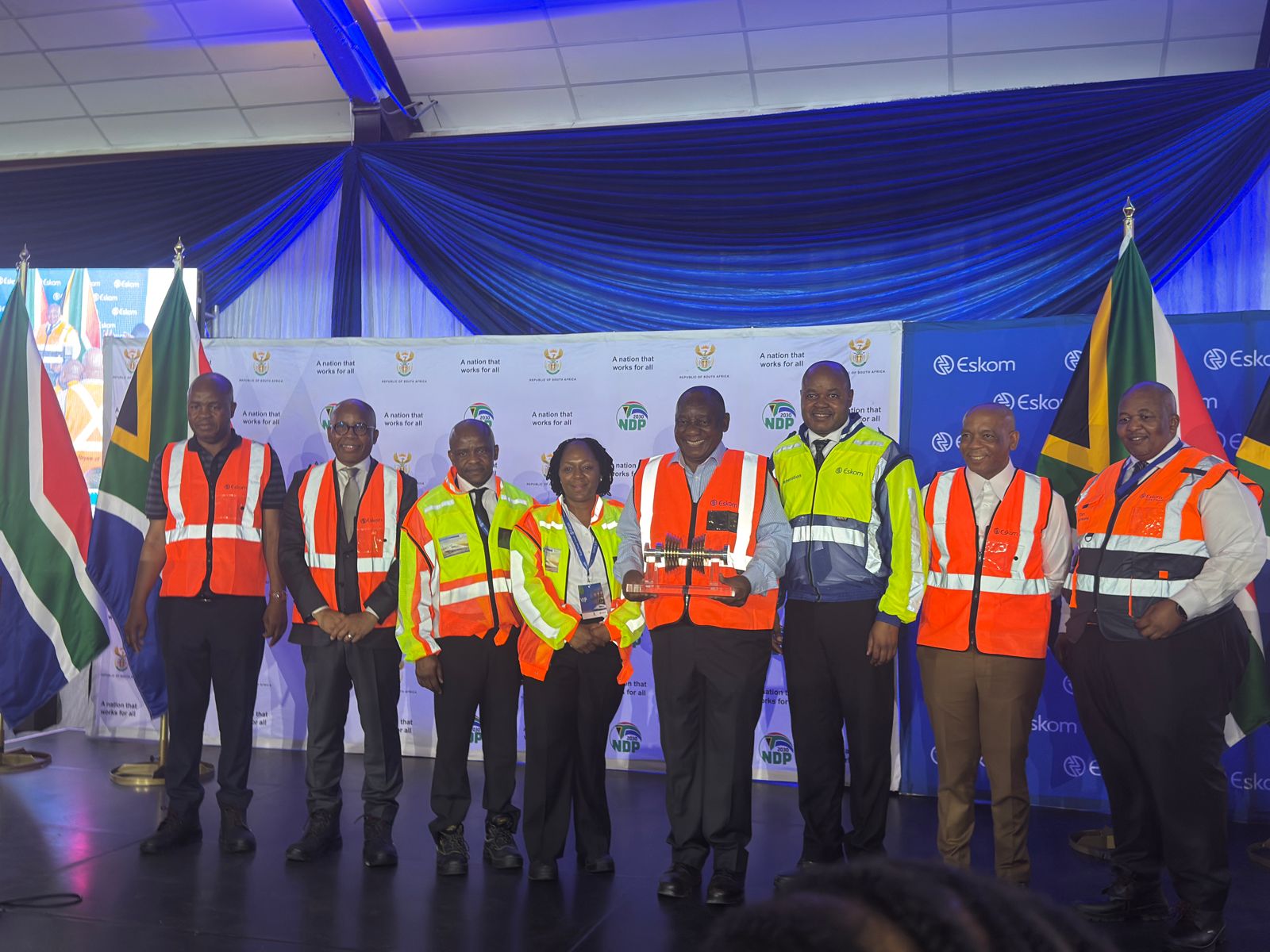
Addressing workers during a recent site visit, Cyril Ramaphosa described the development as a turning point for national energy security. The final unit, Unit 6, entered commercial operation in September 2025, contributing an additional 800 MW to the grid and signalling the completion of Eskom’s long running build programme, which also includes the Medupi Power Station.
Located in Nkangala District Municipality, Kusile is now regarded by government as a central pillar of the country’s electricity system. Together with Medupi, the plant delivers a combined 9.6 GW, forming what Ramaphosa characterised as the backbone of South Africa’s energy supply for decades to come.
The President pointed to improving performance metrics, noting that Kusile has achieved an average Energy Availability Factor of 74%, with peaks of up to 90%. These gains form part of broader improvements under the Energy Action Plan introduced in 2022, at a time when load shedding was severely constraining economic activity.
South Africa is now approaching a full year without load shedding, while the national Energy Availability Factor has risen to 65%, up 4% year on year. According to Ramaphosa, this recovery is supporting industrial activity, restoring investor confidence and underpinning economic growth.
However, despite the operational milestone and improved system performance, Kusile remains under scrutiny due to its troubled development history and financial burden.
Originally budgeted at approximately R80 billion, the project’s cost has escalated to more than R160 billion, representing an increase of over 100%. When combined with Medupi, total cost overruns exceed R300 billion, placing significant strain on Eskom’s balance sheet and raising concerns about long term financial sustainability.
The project has also experienced delays of more than 11 years, driven by a combination of design defects, contractor underperformance, labour instability and weak project oversight. Technical failures have further complicated operations, most notably the 2022 flue gas duct collapse, which highlighted ongoing engineering risks at the facility. Read more
Findings from oversight bodies and investigations have pointed to systemic governance failures, including procurement irregularities, inaccurate material estimation and inadequate site management. The State Capture Commission previously identified widespread corruption linked to Kusile, exacerbating financial losses and undermining project execution. Read more
Parliamentary oversight has reinforced these concerns. The Portfolio Committee on Electricity and Energy has flagged the scale of cost escalation as a major issue, calling for accountability and stronger controls to address contractor performance and procurement practices. The committee has also stressed the need for transparency in ongoing investigations and consequences for those implicated in corruption. Read more
While Kusile is unlikely to generate a conventional financial return given its capital cost, Eskom maintains that the plant remains a strategic national asset. Its contribution to grid stability is viewed as essential for supporting economic recovery and enabling long term growth.
Ramaphosa acknowledged the project’s difficult trajectory, citing cost overruns, technical challenges and corruption as defining features of its development. He emphasised that lessons from Kusile have informed efforts to strengthen governance, improve financial controls and ensure greater accountability in future infrastructure delivery.
As South Africa advances reforms aimed at restructuring the electricity sector, Kusile stands as both a critical source of generation capacity and a cautionary example of the risks associated with large scale energy projects that are mismanaged.
Author: Bryan Groenendaal