- Kenya seeks transaction advisors for three large scale PPP power projects with KenGen.
- The plan targets improved grid stability and diversified energy mix.
- The government aims to mobilise private capital for multi-billion KES infrastructure rollout.
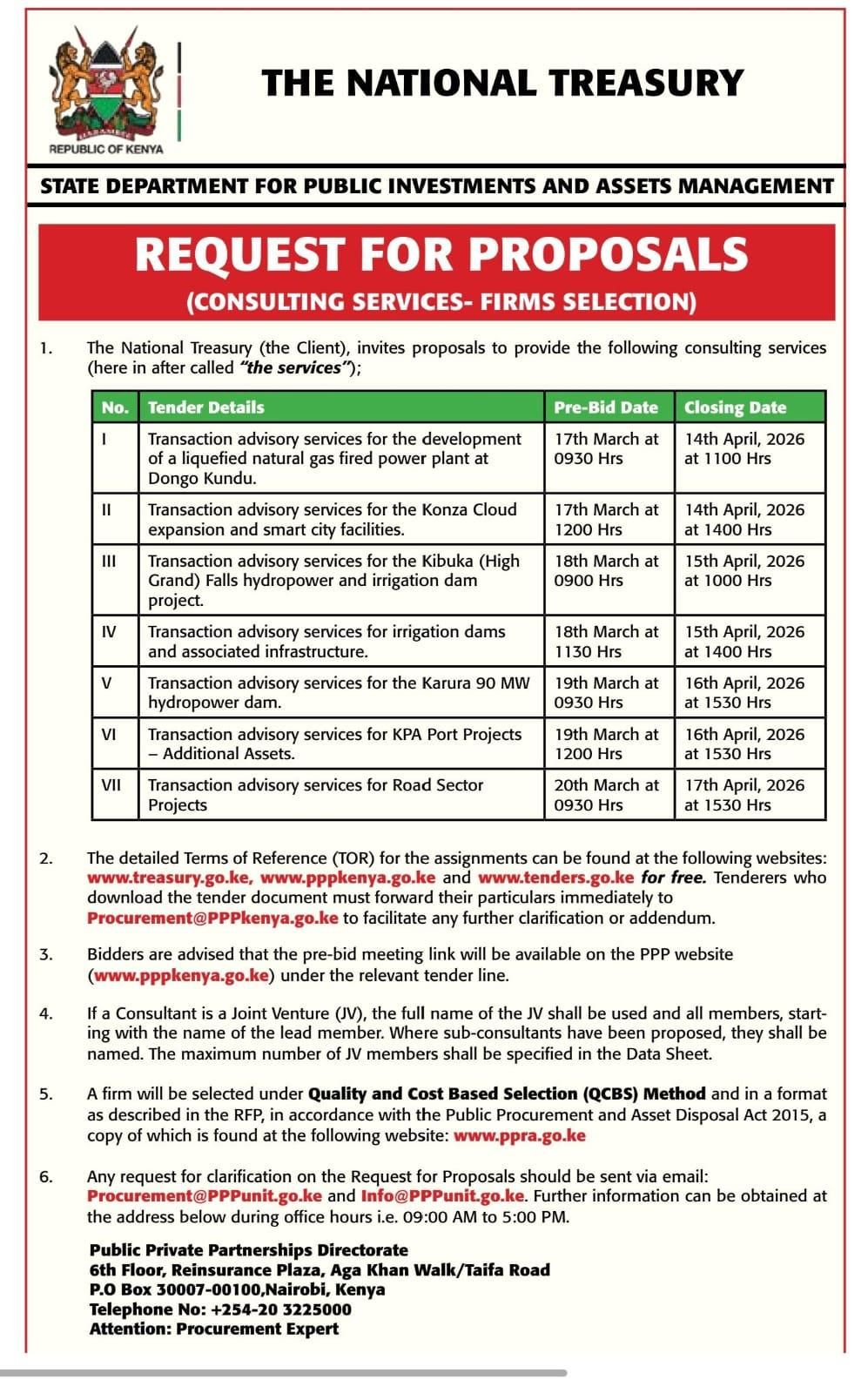
Kenya has launched a procurement process to secure transaction advisory services for three major power projects under a Public Private Partnership (PPP) framework namely; the Dongo Kundu LNG Power Project, the 700MW Kibuka High-Falls Hydropower and Irrigation Dam, and the Karura 90 MW Hydropower Project.
The proposed developments include the 700 MW High Grand Falls hydropower project on the Tana River, which is expected to deliver low-cost baseload power while supporting downstream flood control. A second scheme, the Kibuka hydropower project, will expand generation capacity within the Seven Forks cascade, a critical component of Kenya’s hydroelectric system.
The third project focuses on LNG to power, positioning gas fired generation as a transitional solution to replace petroleum based thermal plants and enhance grid stability.
The government through the Public-Private Partnerships Directorate has issued requests for proposals for legal and financial advisors to support project structuring, due diligence and negotiations. The advisory teams will work alongside KenGen to prepare the projects for private sector participation.
Authorities in Nairobi are pursuing an accelerated development timeline, with several projects already moving from feasibility stage towards procurement of private partners between late 2025 and early 2026.
By leveraging PPP structures, Kenya aims to unlock international investment and reduce pressure on public finances, as the country faces multi-billion KES funding requirements to expand its energy infrastructure.
The PPP programme is complemented by KenGen’s longer term strategy to deliver 1500 MW of additional green capacity over the next decade, with a strong focus on geothermal and solar. This expansion underpins Kenya’s ambition to achieve a fully renewable electricity grid by 2030.
Good luck!
Author: Bryan Groenendaal