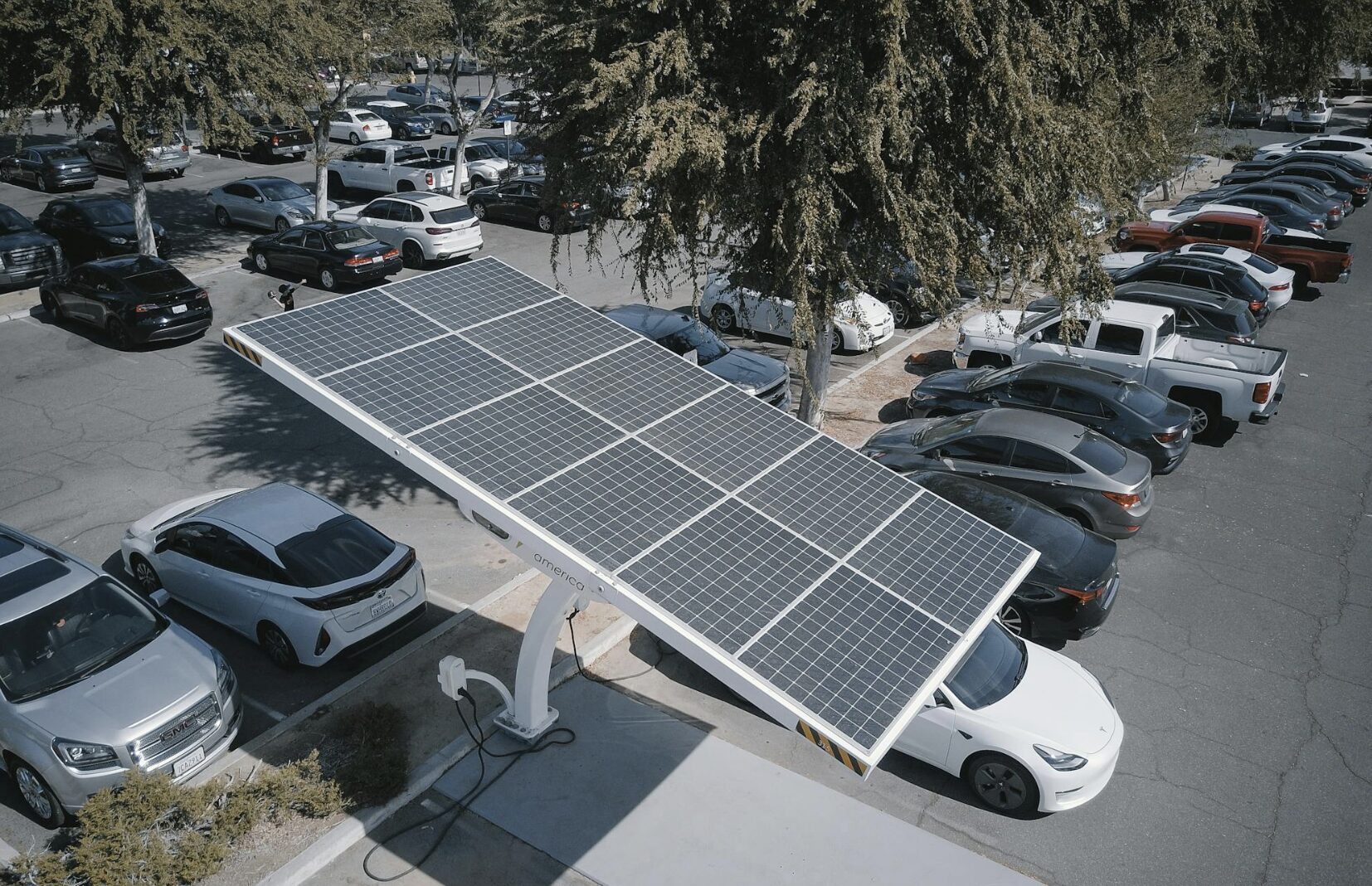
- Solar PV powered charging stations can cut transport emissions and reduce pressure on public power grids.
- Smart charging and vehicle to grid technologies are key to maximising solar use.
- Accurate system sizing based on real world data improves economic performance.
A new report from the International Energy Agency Photovoltaic Power Systems Programme (IEA PVPS) highlights that photovoltaic powered charging stations are both technically and economically viable when combined with intelligent energy management systems.
The findings form part of the Task 17 research initiative which examines the integration of solar generation with electric vehicle charging infrastructure. According to the report, well designed photovoltaic charging systems can play an important role in decarbonising transport while supporting grid stability as electric vehicle adoption accelerates.
One of the central conclusions is the need for accurate system sizing. The report notes that effective deployment depends on carefully matching photovoltaic generation capacity and battery storage with local electricity demand. This requires analysis based on hourly and seasonal energy patterns rather than relying only on annual averages.
Researchers also highlight the importance of intelligent control systems. Smart charging strategies allow vehicles to charge when solar generation is highest, while advanced services such as vehicle to grid and vehicle to home enable electric vehicles to act as distributed energy resources that can support grid flexibility.
The study further emphasises that photovoltaic charging infrastructure must be designed according to specific use cases. Installations at workplaces, in microgrids, or for electric bus fleets each require different configurations that balance capital cost, emissions reduction, and operational constraints.
Another key recommendation is the use of empirical data to guide system design. The report notes that real world operational data provides more accurate inputs for system sizing and financial modelling than purely theoretical assumptions.
According to the analysis, integrating solar generation with electric vehicle charging can significantly lower the carbon footprint of road transport. At the same time, it can reduce the additional load placed on public electricity networks as electric vehicle adoption continues to grow.
Link to the full report HERE
Author: Bryan Groenendaal