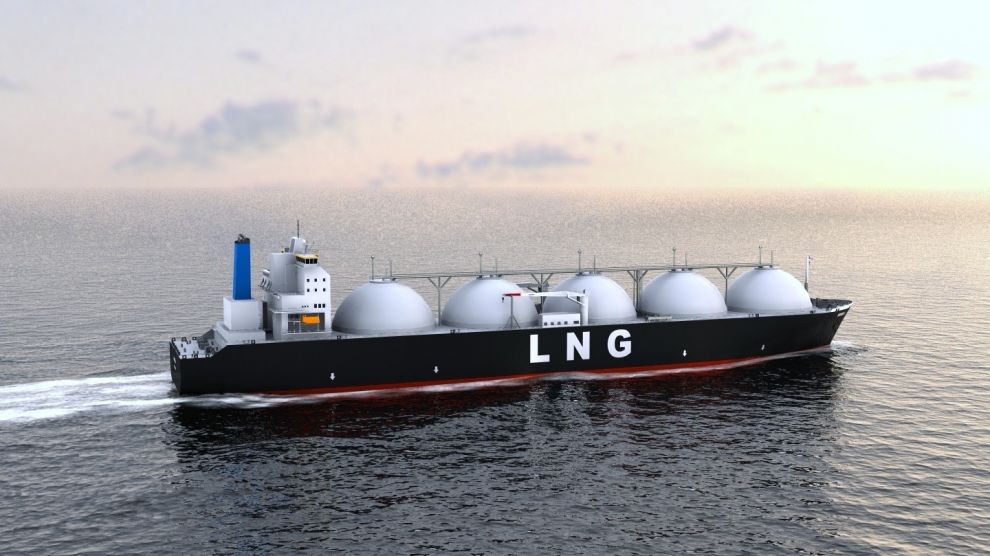
- Global natural gas markets are set for a dramatic transformation by the end of the decade, driven by an unprecedented surge in liquefied natural gas (LNG) production capacity, according to the International Energy Agency’s (IEA) new Gas 2025 report released today.
- The medium-term outlook foresees roughly 300 billion cubic metres (bcm) of new LNG export capacity being added by 2030, the largest increase in history and primarily from the United States and Qatar.
The report provides an in-depth analysis of projected supply, demand, and trade dynamics in global gas markets through 2030. It reviews recent market developments ahead of the 2025–26 Northern Hemisphere winter and explores how new LNG production could reshape global energy security, pricing, and demand trends.
Over 80 bcm per year of LNG liquefaction capacity has already been sanctioned in the United States in 2025 alone—an all-time high for the country’s LNG sector. The IEA notes that this surge will enhance supply security and ease market tightness that has persisted since Russia’s invasion of Ukraine in 2022, which caused major disruptions to global gas flows and triggered price spikes.
While global gas markets have gradually stabilised, prices remain above historical averages, constraining demand in key import markets, particularly in Asia. Global gas demand growth is expected to slow from 2.8% in 2024 to less than 1% in 2025. However, as the new wave of LNG projects comes online, total LNG supply is projected to increase by 250 bcm annually by 2030, potentially leading to lower prices and renewed demand growth.
“The coming LNG wave is set to offer some respite for global gas markets, which have been tight and volatile for several years,” said Keisuke Sadamori, the IEA’s Director of Energy Markets and Security. “As new supply comes to market, notably from the United States and Qatar, it should apply downward pressure on prices—offering welcome relief for gas importers worldwide. But elevated geopolitical tensions and economic uncertainty mean there is no room for complacency. Global cooperation remains essential to ensure supply security—especially with rising electricity consumption set to drive gas demand higher in many regions.”
Under the IEA’s base case scenario, global gas demand is projected to grow by nearly 1.5% annually from 2024 to 2030, equivalent to an increase of about 380 bcm. The Asia Pacific region is expected to account for half of that growth, while the Middle East—driven by countries such as Saudi Arabia shifting from oil to gas for power generation—will contribute nearly 30%.
In a high-demand scenario, where lower LNG prices persist for an extended period, natural gas use could grow by up to 1.7% annually to 2030. This would add around 65 bcm per year of additional demand on top of the base case, particularly in Asia. However, sustained low prices could weaken investment incentives for developers, potentially leading to a supply crunch after 2030 if demand outpaces new project commitments.
The IEA also highlights growing flexibility in LNG trade. By 2030, more than half of all LNG volumes are expected to be sold under destination-free contracts, signalling a shift toward a more liquid and competitive market structure.
The report further examines how carbon capture, utilisation and storage (CCUS) technologies could be deployed along LNG value chains to cut emissions intensity, and it assesses the medium-term prospects for low-emission alternatives such as biomethane, hydrogen, and e-methane.
According to the IEA, the coming decade marks a pivotal phase for natural gas—balancing the benefits of expanded supply and affordability against the risks of investment uncertainty and geopolitical volatility.
Link to the full report HERE
Author: Bryan Groenendaal