- IDC confirms R690 million BEE mezzanine loan and R900 million senior debt linked to H1 Holdings backed Kenhardt projects.
- Questions persist over whether funding structures advance broad based empowerment or concentrate value among politically connected elites.
- Limited transparency on local labour and content compliance raise concerns in the energy sector.
The Industrial Development Corporation’s response to mounting questions over its funding of H1 Holdings has done little to quell concern across South Africa’s energy and development finance sectors, with critics arguing that key issues remain unresolved.
The IDC is mandated to promote sustainable industrial development, job creation and inclusive economic participation. Yet its latest disclosures around the financing of H1 Holdings suggest a growing disconnect between policy intent and execution, particularly within the renewable energy sector.
At the centre of the debate is the IDC’s confirmation that it extended a R690 million Black Economic Empowerment (BEE) mezzanine loan facility, alongside R900 million in senior project debt, to support H1 Holdings’ 49% equity stake in the Kenhardt solar and battery storage projects developed by Norway independent power producer, Scatec. While the IDC emphasises that the mezzanine loan has since been fully repaid following refinancing in September 2025 by Standard Bank, the structure and rationale of the transaction continue to draw scrutiny.
Related news: Standard Bank provides R1.921billion equity funding facility to H1 Holdings
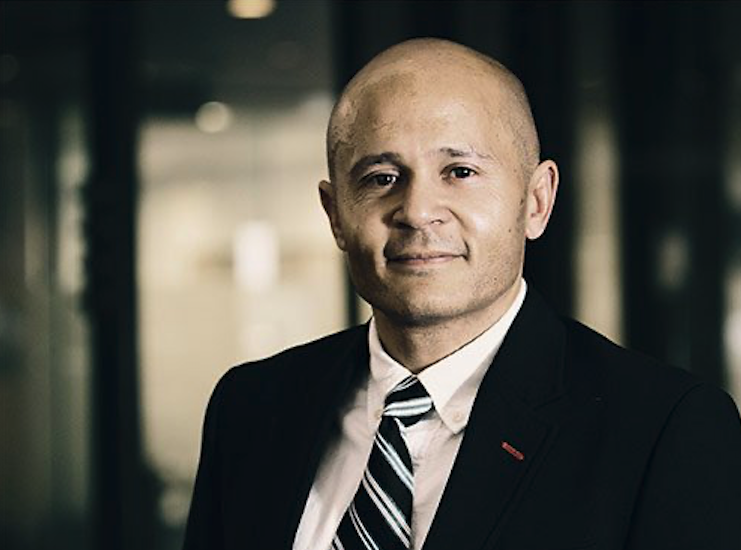
H1 Holdings, led by Rayburn Hendriks, is widely viewed by market participants as a financial vehicle rather than an operational industrial player. The company seemingly does not participate in engineering, procurement or construction activities and allegedly contributes no technical delivery capability to the projects it invests in. Its primary role appears to be the provision of empowerment credentials, enabling foreign independent power producers to meet local ownership requirements.
This raises fundamental questions about the IDC’s interpretation of economic empowerment. Ironically, the corporation maintains that H1 Holdings was not presented as a broad based empowerment entity and that such a structure is not required under the Risk Mitigation Independent Power Producer Procurement Programme. Critics argue that this position undermines the broader objectives of inclusive growth.
The contradiction is further highlighted by the IDC’s own classification of the H1 Holding funding as a BEE mezzanine loan. If the transaction was not intended to support broad based empowerment, stakeholders are asking why public development finance was deployed under that banner to back a privately controlled investment structure.
Concerns are also mounting regarding the concentration of economic benefits. Industry analysts note that transactions of this nature often result in a disproportionate share of value accruing to one or only a few individuals of investors, with minimal downstream impact on job creation and skills development.
Equally troubling for the energy sector are unresolved questions around local content and labour compliance. The Kenhardt projects were delivered in record time under an engineering, procurement and construction model led by Scatec, yet there has been limited disclosure regarding adherence to local labour quotas and materials sourcing requirements. These elements are central to the developmental objectives of South Africa’s renewable energy procurement programmes.
Related news: Mounting allegations at Red Rockets 275MW Virginia solar project expose oversight gaps in South Africa’s REIPPPP
Additional controversy stems from the alleged rigging of Bid Window 5 of the Renewable Energy Independent Power Producer Procurement Programme (REIPPPP), where H1 Holdings was named as BBBEE partner in no less that 21 of the 25 projects awarded preferred bidder status and only 11 projects reached financial close. H1 Holdings and its international partners are currently engaged in a legal dispute with the IPP Office over the non-payment of bid bonds linked to unsuccessful projects. Read more
The IDC has defended its processes, stating that all funding approvals are subject to robust due diligence, including verification of ultimate beneficial ownership through standard FICA and KYC protocols. It has also dismissed concerns regarding conflicts of interest, noting that any individuals with prior links to development finance institutions were not employed by H1 Holdings at the time of funding approval.
However, governance assurances alone appear insufficient to address broader structural concerns. The absence of detailed disclosure on value distribution, empowerment outcomes and compliance metrics continues to fuel scepticism among industry stakeholders. Read more
This comes at a time of intensified public and institutional scrutiny. Business organisations, including the National African Federated Chamber of Commerce and Industry, have questioned the consistency and fairness of IDC funding decisions. Parliament has since initiated a formal inquiry into the corporation’s lending practices, increasing pressure on the institution to demonstrate alignment with its developmental mandate.
In response, the IDC has committed to strengthening governance and transparency, including the establishment of an independent compliance panel expected to be operational by June 2026. While this signals a step towards reform, market participants caution that meaningful change will depend on a reassessment of how empowerment is defined, measured and implemented in capital intensive sectors such as energy.
For investors and developers active in Africa’s renewable energy landscape, the outcome of this scrutiny carries significant implications. Confidence in procurement frameworks and financing structures remains closely tied to perceptions of fairness, transparency and genuine socio economic impact.
Related news: The BBBEE cat that has all the renewable energy cream in South Africa
Until greater clarity is provided, the IDC’s response risks reinforcing the very concerns it seeks to dispel: that public capital intended to drive inclusive growth may instead be enabling a narrow form of financial participation with limited developmental return.
Author: Bryan Groenendaal