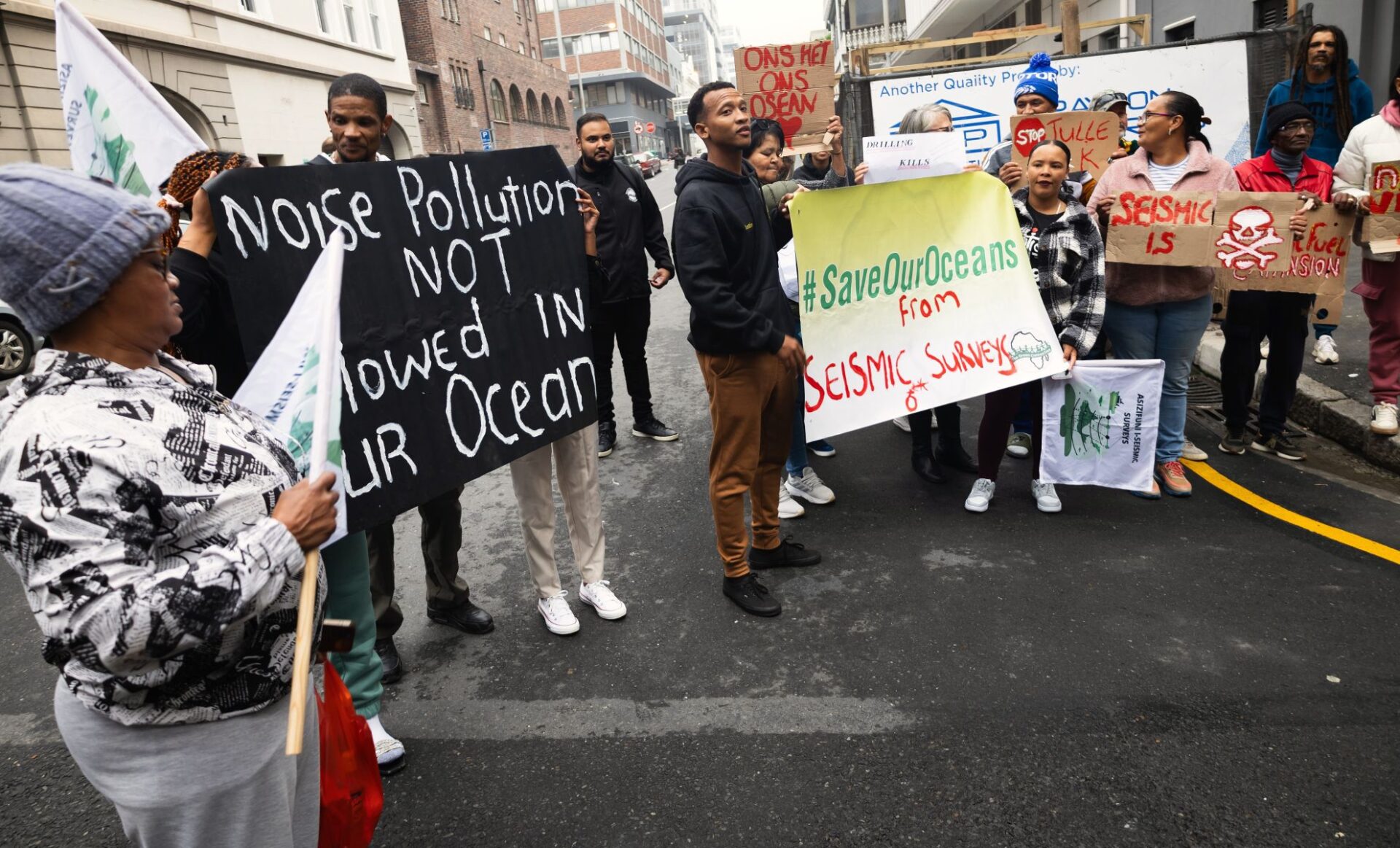
- Western Cape High Court has concluded hearings in a legal challenge against approval of a major offshore seismic survey on South Africa’s West Coast.
- Applicants argue that environmental, social and climate impacts were not adequately considered before authorisation was granted.
- Judgment has been reserved, with the court expected to deliver its ruling at a later date.
The Western Cape High Court has reserved judgment following a two day hearing into a legal challenge against the approval of a large offshore 3D seismic survey proposed off South Africa’s West Coast.
The case was brought by Aukotowa Fisheries Primary Co-operative, The Green Connection and Natural Justice against the Department of Mineral and Petroleum Resources (DMPR) and TGS Geophysical Company UK Ltd. The applicants are seeking to have the environmental authorisation for the survey reviewed and set aside.
The project, which is intended to identify potential offshore oil and gas resources, received environmental authorisation from the DMPR. That approval was later upheld by the Minister of Forestry, Fisheries and the Environment after appeals from small scale fishers and civil society organisations were dismissed.
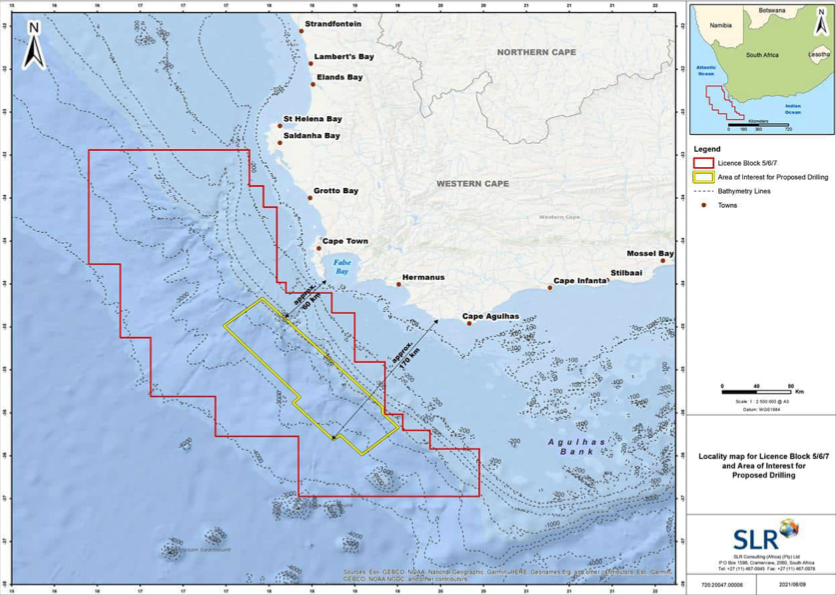
Locality of block 5/6/7 and the area of interest for proposed exploration drilling by TGS off the south-west coast. Image credit: SLR
According to The Green Connection Outreach Ambassador Neville van Rooy, a central issue before the court was whether decision makers had access to and properly considered all relevant information before granting approval.
He argued that the environmental assessment process failed to adequately evaluate the potential impacts of seismic blasting on marine ecosystems and the coastal communities that depend on them. Seismic surveys use high intensity sound pulses to map subsea geological formations and are commonly deployed during offshore oil and gas exploration activities.
Van Rooy said the project’s need and desirability assessment focused primarily on projected economic benefits while failing to fully account for potential environmental, social and long term economic risks associated with the broader oil and gas value chain.
The applicants contend that a balanced assessment should include the potential consequences for marine biodiversity, fishing dependent communities and future generations, rather than concentrating narrowly on anticipated economic gains.
The hearing also examined whether the project met regulatory requirements relating to need and desirability, including whether it is environmentally responsible and socio economically justified. The applicants argued that even if local oil and gas resources were developed, South Africa could remain exposed to volatile international energy markets rather than achieving lower domestic energy costs.
Walter Steenkamp of Aukotowa Fisheries Primary Co-operative told the court that the stakes are particularly high for small scale fishing communities whose livelihoods depend on healthy marine ecosystems.
He warned that insufficient consideration of potential impacts on fishing grounds and coastal livelihoods could have serious consequences for already vulnerable communities facing rising unemployment, poverty and inequality.
Natural Justice Programme Manager Melissa Groenink Groves argued that deficiencies existed within the environmental assessment process. She stated that the Director General of the Department of Mineral and Petroleum Resources allegedly did not have access to key assessment documents and specialist reports before granting environmental authorisation.
The applicants also raised broader concerns about the alignment of offshore oil and gas exploration activities with South Africa’s climate commitments under the Paris Agreement.
Van Rooy noted that approximately 90% of South Africa’s ocean territory is currently under lease for offshore oil and gas exploration, arguing that exploration projects should be assessed on the basis of their full lifecycle environmental, social and climate impacts rather than on projected economic benefits alone.
The outcome of the case could have significant implications for future offshore exploration projects in South Africa, particularly regarding environmental governance, public participation requirements and the assessment of climate related impacts within the country’s energy development framework.
Judgment has been reserved and will be delivered at a later date.
Author: Bryan Groenendaal