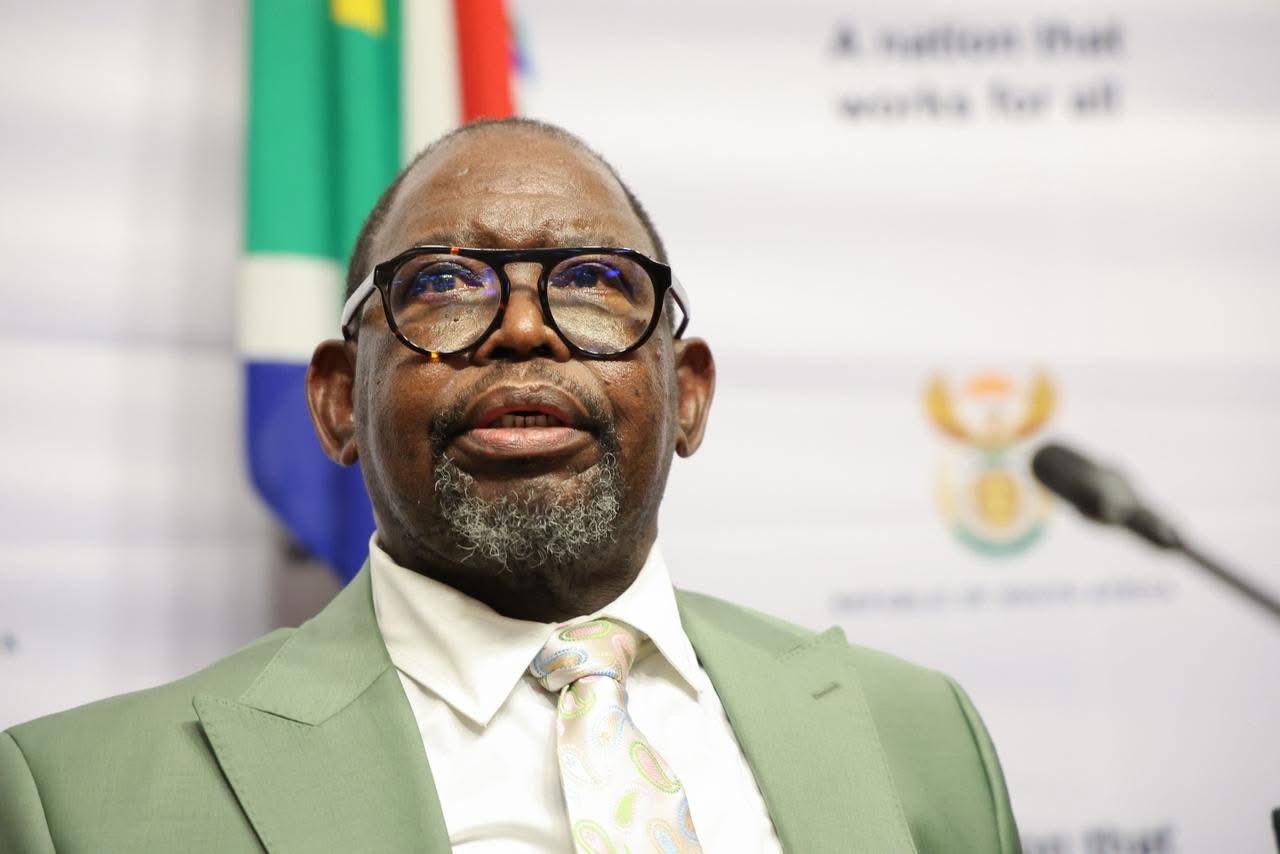
- South Africa’s Finance Minister, Enoch Godongwana, has announced sweeping infrastructure reforms and investment measures aimed at driving South Africa’s economic recovery and long-term growth, pledging to shift government spending from consumption to investment.
Delivering the Medium-Term Budget Policy Statement (MTBPS) in Parliament on Tuesday, Godongwana said infrastructure remains central to President Cyril Ramaphosa’s economic vision, describing it as “the flywheel of our economy.”
“We are leveraging public resources to mobilise private finance and expertise at scale to strengthen service delivery, improve spending effectiveness, and drive higher economic growth,” Godongwana said.
Boosting Investment and Private Partnerships
The minister revealed that capital payments are now the fastest-growing expenditure item, rising by 7.5% over the medium term.
Recent amendments to public-private partnership (PPP) regulations, effective from June 2025, are designed to unlock new investment opportunities across all levels of government by simplifying approval processes for smaller projects.
New guidelines on unsolicited bids and fiscal commitments were also introduced last month to create a clearer framework for how private sector project proposals are assessed and managed.
“The unsolicited bid guideline provides a clear structured pathway for the private sector to submit project ideas to government,” Godongwana explained.
Municipal PPP regulations are set to be updated by 2026, while the Department of Transport’s private-sector participation unit is reviving investment opportunities in passenger transport and freight logistics. The unit plans to issue its first rail corridor request for proposals (RFP) by December 2025, with more to follow early next year.
Energy, Water, and Infrastructure Finance Reforms
To enhance energy security and support decarbonisation, government will contribute R2 billion to capitalise a new Credit Guarantee Vehicle, which will facilitate private investment in electricity transmission expansion.
Godongwana said this marks “a new era in PPPs,” enabling private investors to participate in high-voltage transmission infrastructure — a key step toward diversifying power generation sources and strengthening the national grid.
The minister also announced the forthcoming launch of a R15 billion infrastructure bond, part of government’s strategy to raise cheaper, dedicated financing for infrastructure projects.
Meanwhile, the Water Partnerships Office is developing a pipeline of non-revenue water and water reuse projects across municipalities, aimed at attracting private co-investment.
Disaster Relief and Institutional Strengthening
Government has allocated R4.1 billion for disaster relief to repair infrastructure damaged by floods in KwaZulu-Natal, Mpumalanga, and the Eastern Cape. The funding will go toward fixing schools, clinics, pipelines, and substations affected over the past two years.
To better coordinate infrastructure planning and financing, the Infrastructure Finance and Implementation Support Agency will be established by March 2026. The agency will provide project preparation support, centralise financing functions, and crowd-in private capital for major projects.
Municipal Capacity and Reform
Acknowledging persistent service delivery challenges at the local government level, Godongwana said several reforms are underway to “remedy this untenable situation.”
A new utility reform programme will be piloted in select Mpumalanga municipalities to stabilise and professionalise water and electricity services. Accredited partners such as the Development Bank of Southern Africa (DBSA) and the Municipal Infrastructure Support Agent (MISA) will assist in implementation while building municipal capacity.
Infrastructure Investment Target
Godongwana reaffirmed government’s ambition to push public sector investment in infrastructure beyond R1 trillion over the next three years.
“This is how we will ensure that our goal of public sector investment in infrastructure exceeds the R1 trillion mark,” he said.
The minister concluded that the reforms signal a new chapter in South Africa’s infrastructure agenda—one that prioritises efficient spending, private sector collaboration, and long-term economic resilience.
Author: Bryan Groenendaal