- Nigeria is expected to reach 1.5 GW of solar by the middle of the next decade, according to figures from London-based data analytics and consulting company GlobalData.
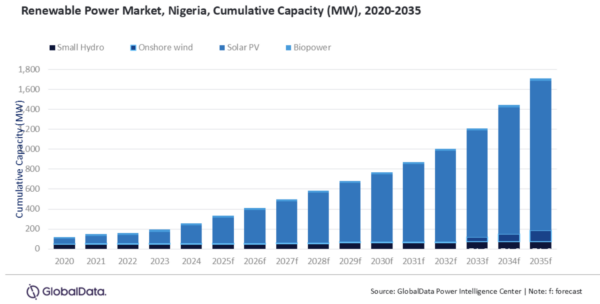
In figures shared with pv magazine, the consultancy predicts the country’s cumulative solar capacity will increase from 179 MW at the end of last year to 255 MW by the end of this year.
Steady growth in solar deployment is expected year on year, reaching 678 MW by the end of this decade. The figures go on to forecast Nigeria reaching 1 GW of solar before the end of 2033, leading to 1.5 GW by 2035.
The analysis forms part of GlobalData’s latest report covering Nigeria’s power market trends to 2035. The report says total renewables deployment, encompassing hydro, onshore wind and biopower projects alongside solar, is forecast to reach almost 800 MW by the end of the decade, increasing to 1.7 GW by 2035.
GlobalData’s analysis says solar technology stands out as a significant investment prospect thanks to the country’s Renewable Energy Masterplan. Attaurrahman Ojindaram Saibasan, Senior Power Analyst at GlobalData, added that energy poverty and the inconsistency of electricity supply are the primary catalysts for solar adoption in Nigeria.
The distributed solar power (DSP) market is also growing in Nigeria, GlobalData’s analysis adds, thanks to innovations in solar technology coupled with novel financing models that are enhancing both viability and scalability.
Saibasan added that DSPs possess considerable potential in Nigeria.
“The Rural Electrification Agency is actively executing an expansive strategy that incorporates both energy service company-led and utility-led models. This approach is designed to expedite the electrification process via grid expansion and the deployment of green minigrids,” Saibasan said.
“The primary focus is on electrifying market clusters, manufacturing centers, educational institutions – including schools and universities – and healthcare facilities, utilizing solar PV and hybrid solar PV-diesel systems.
Author: Patrick Jowett
This article was originally published in pv magazine and is republished with permission.