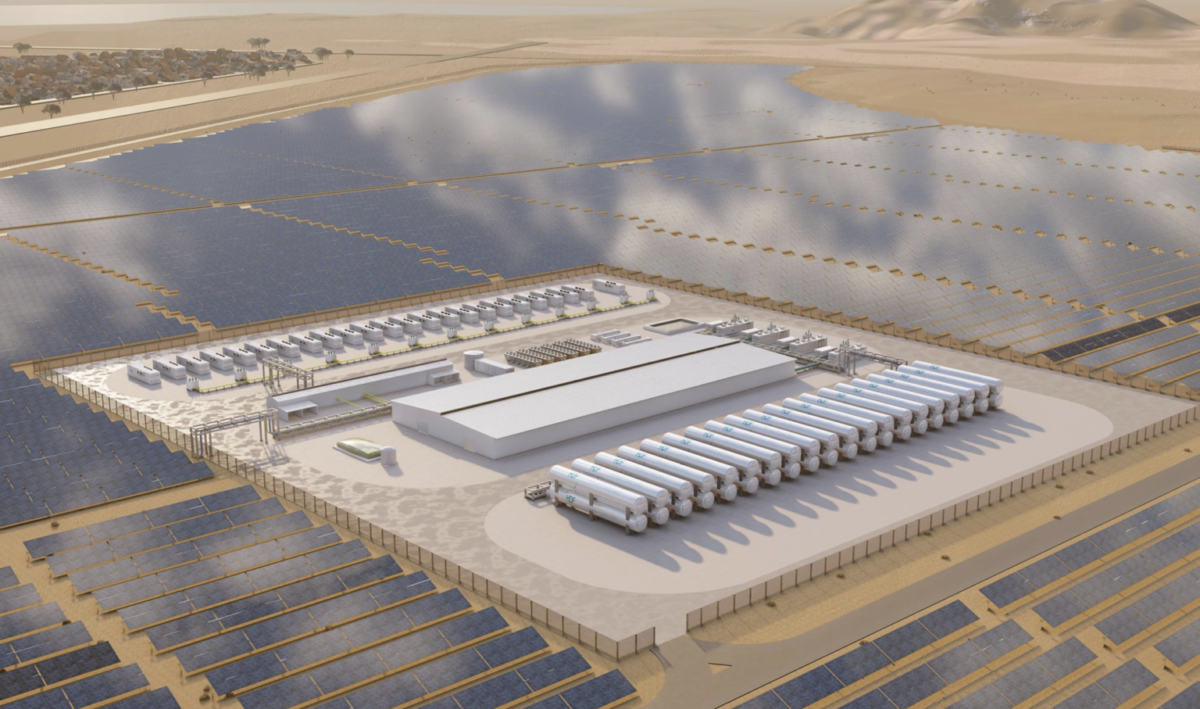
- A majority of Africa’s planned large-scale solar and wind projects are being designed not to power the continent, but to produce green hydrogen for export to Europe — a trend that could undermine Africa’s own energy development goals, according to new research from Global Energy Monitor (GEM).
The analysis finds that nearly two-thirds of the utility-scale renewable capacity proposed across Africa — 216 gigawatts (GW) out of roughly 350 GW — is earmarked for hydrogen production rather than for domestic electricity supply. The projects span 35 developments in countries including Botswana, Djibouti, Egypt, Kenya, Mauritania, Morocco, Mozambique, Namibia, South Africa, The Gambia, and Western Sahara.
GEM researchers warn that many of these plans face steep financial and logistical challenges. Most projects lack confirmed buyers, realistic timelines, or developers with experience building infrastructure at such massive scale. Only a single hydrogen-linked renewable project is currently operational on the entire continent.
The scale of proposed developments is particularly stark in Mauritania, where companies have announced 79.5 GW of wind and solar projects — all for hydrogen production. The country currently operates just 0.3 GW of renewable capacity, a fraction of what is being proposed. Developers are effectively planning a build-out equivalent to triple the capacity of China’s Three Gorges Dam, the world’s largest power project.
Similarly, Mozambique and Djibouti — both with minimal existing renewable infrastructure — are slated to host 12 GW and 10 GW of green hydrogen projects, respectively. GEM notes that if Mozambique’s 12 GW proposal were redirected to the national grid, it would double the country’s current electricity generation. Djibouti, with just 0.06 GW of renewables today, could reach European-level per-capita electricity consumption with only a fraction of the capacity earmarked for hydrogen.
GEM also highlights that 65% of companies behind these hydrogen initiatives are European, and many have never executed projects of comparable magnitude. Without committed offtakers, the report suggests many of the proposals may not be economically viable, even if constructed.
Julie Macuga, a researcher at Global Energy Monitor, said the push for African hydrogen exports reflects a risky bet: “European companies and governments backing green hydrogen on the continent need to be transparent about the gamble they are taking. Where hydrogen projects are proposed, people should have the autonomy to decide what types of energy and exports are best suited for them. Small, distributed wind and solar projects have proven effective in addressing energy access in Africa, with millions benefiting from these projects. Hydrogen remains largely hypothetical.”
The report raises concerns that the race to supply Europe’s future hydrogen market could divert renewable potential away from urgently needed local electrification efforts across Africa.
Link to the full report HERE
Author: Bryan Groenendaal