- Eskom’s Energy Availability Factor has declined from above 65% in March to around 60% by early May as winter demand increases.
- Unplanned outages have risen sharply while cold reserve capacity has fallen from nearly 4 GW to close to 1 GW.
- The data suggests reserve margins are tightening despite generation performance remaining stronger than previous winters.
- Eskom has confirmed that it will bring 2 889MW of generation capacity online ahead of the evening peak on Monday, 11 May 2026.
South Africa’s power system is entering winter under increasing pressure as Eskom’s latest performance data shows a steady deterioration in generation availability, rising unplanned outages and a sharp decline in reserve capacity.
Data compiled from Eskom’s Weekly Energy System Updates together with the utility’s real time performance portal shows that the Energy Availability Factor (EAF) has weakened consistently since March, while unplanned outages and unplanned capacity losses have started climbing as electricity demand increases heading into the colder months.
Although the system remains materially healthier than during the severe load shedding period experienced between 2022 and 2024, the latest data indicates that Eskom’s operational buffer is shrinking rapidly.
Eskom’s EAF remained relatively stable through March at above 65%, supported by improved coal fleet reliability and reduced breakdowns across several power stations. However, by early May the EAF had fallen to approximately 60% as more generation units were required online to meet growing evening peak demand.
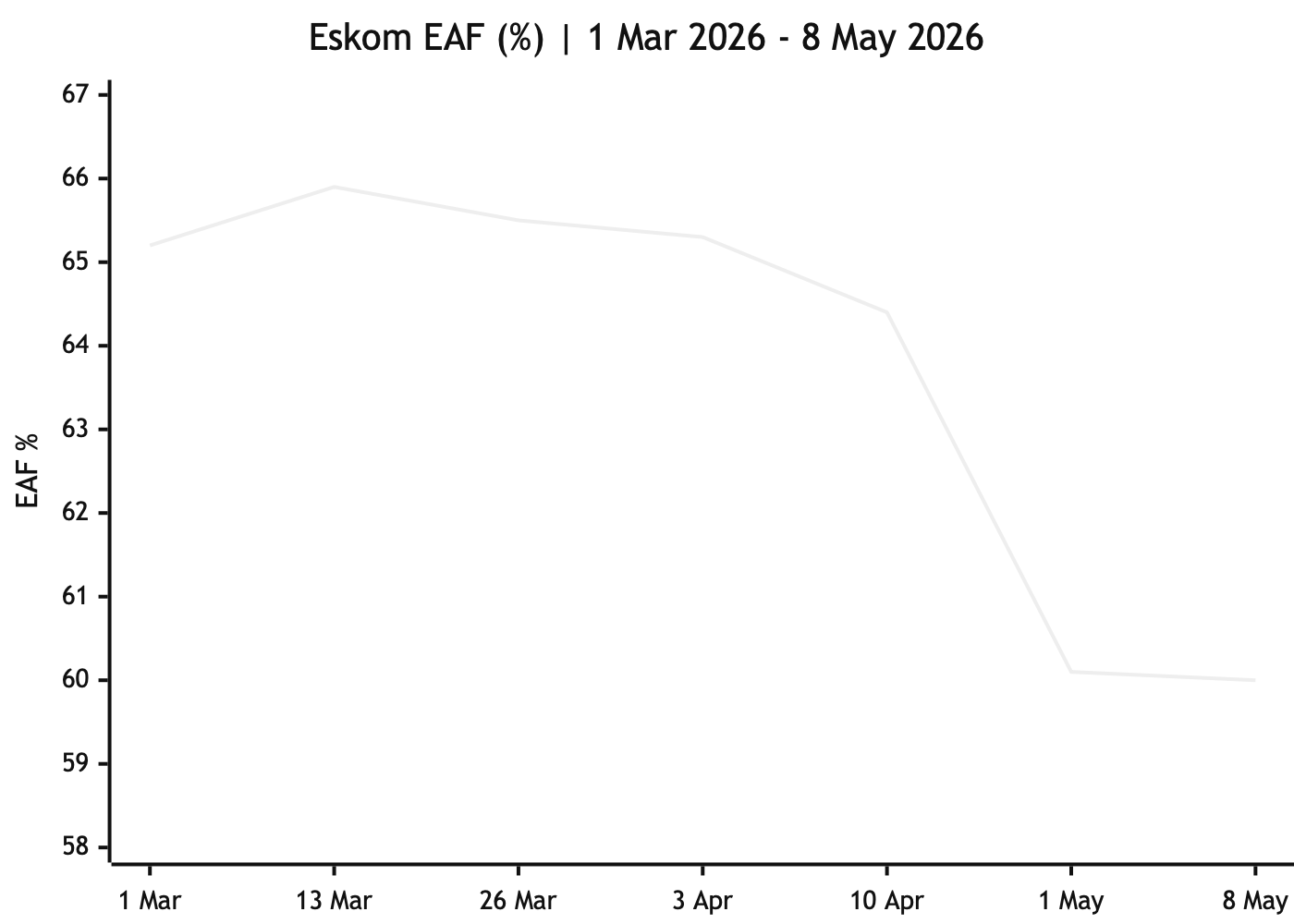
Image credit: GBA
The decline reflects the seasonal reality of Eskom’s winter operating environment where higher demand reduces flexibility for maintenance and increases stress on ageing coal fired generation units.
At the same time unplanned outages have risen sharply after reaching unusually low levels during March. Eskom briefly reduced unplanned outages to close to 7 GW during the month, but by early May breakdowns had increased to around 13 GW.
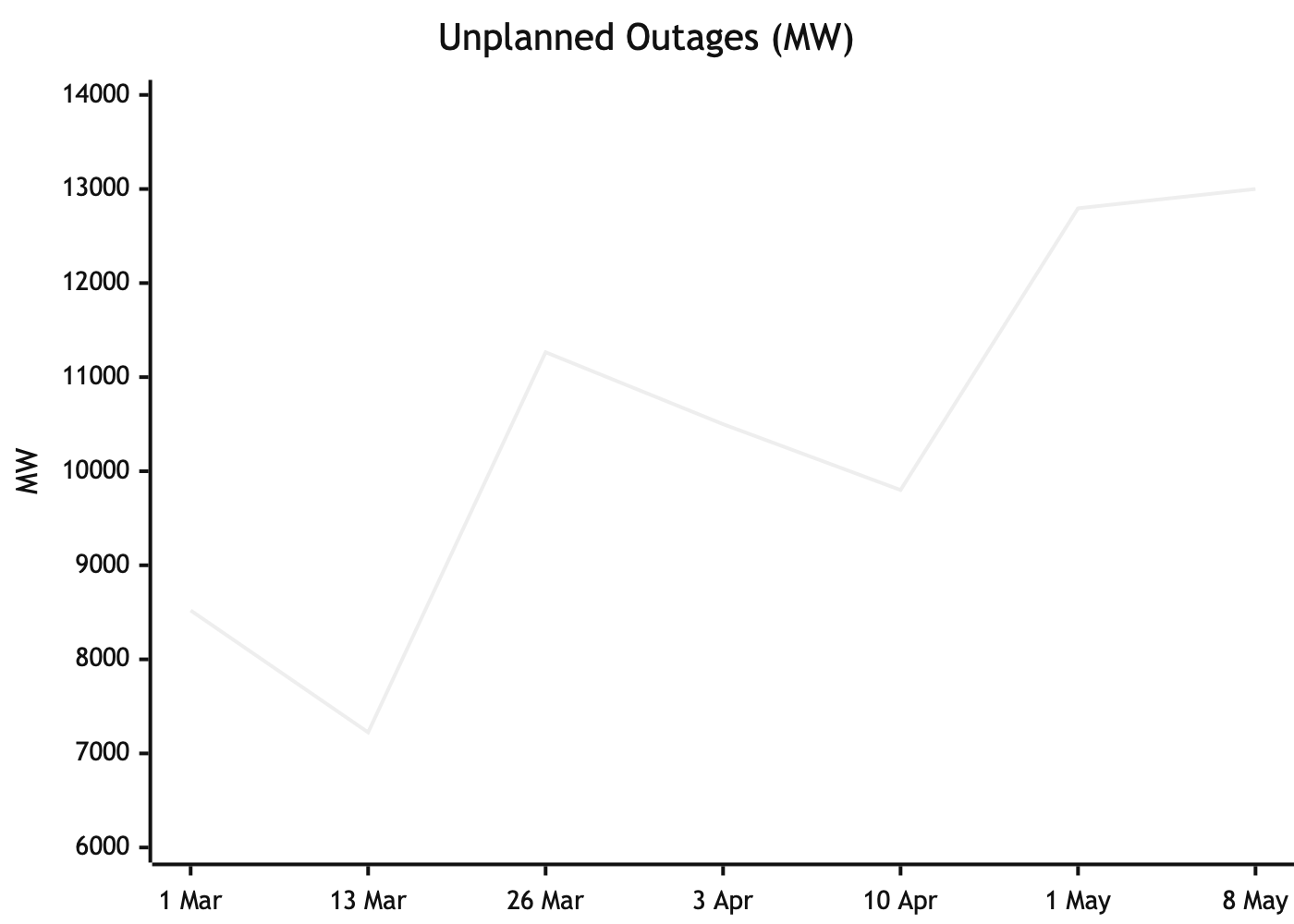
Image credit: GBA
The increase in breakdowns is now translating directly into a rising Unplanned Capacity Loss Factor (UCLF), which has moved from approximately 22.5% in March to around 24% by early May.
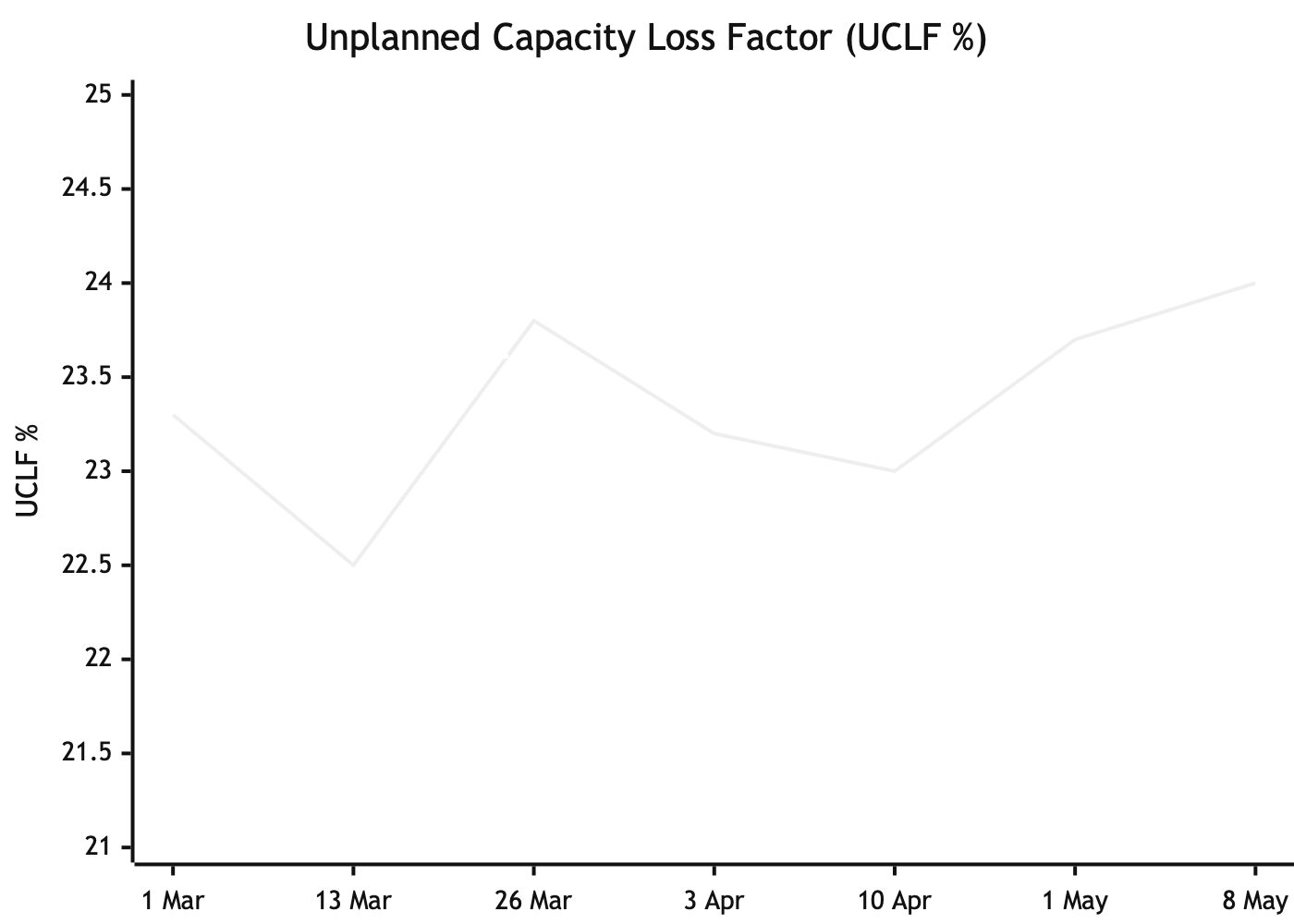
Image credit: GBA
While the deterioration remains moderate compared to historical winter peaks, the trend confirms that Eskom’s coal fleet is coming under increasing operational strain as demand rises.
Planned maintenance activity also reduced significantly during March as Eskom prepared for winter and attempted to maximise generation output. The Planned Capability Loss Factor (PCLF) declined from nearly 16% to just above 11% before rising slightly again in May.

Image credit: GBA
The reduction in planned maintenance reflects Eskom’s ongoing balancing act between improving short term supply security and preserving long term plant reliability.
One of the most significant indicators emerging from the latest data is the sharp decline in generation capacity held in cold reserve.
Cold reserve refers to generation units that are fully shut down but remain available for return to service if required. Eskom entered March with close to 4 GW in cold reserve as lower summer demand and improved fleet performance created surplus generation capacity.
By early May that reserve had fallen to close to 1 GW.
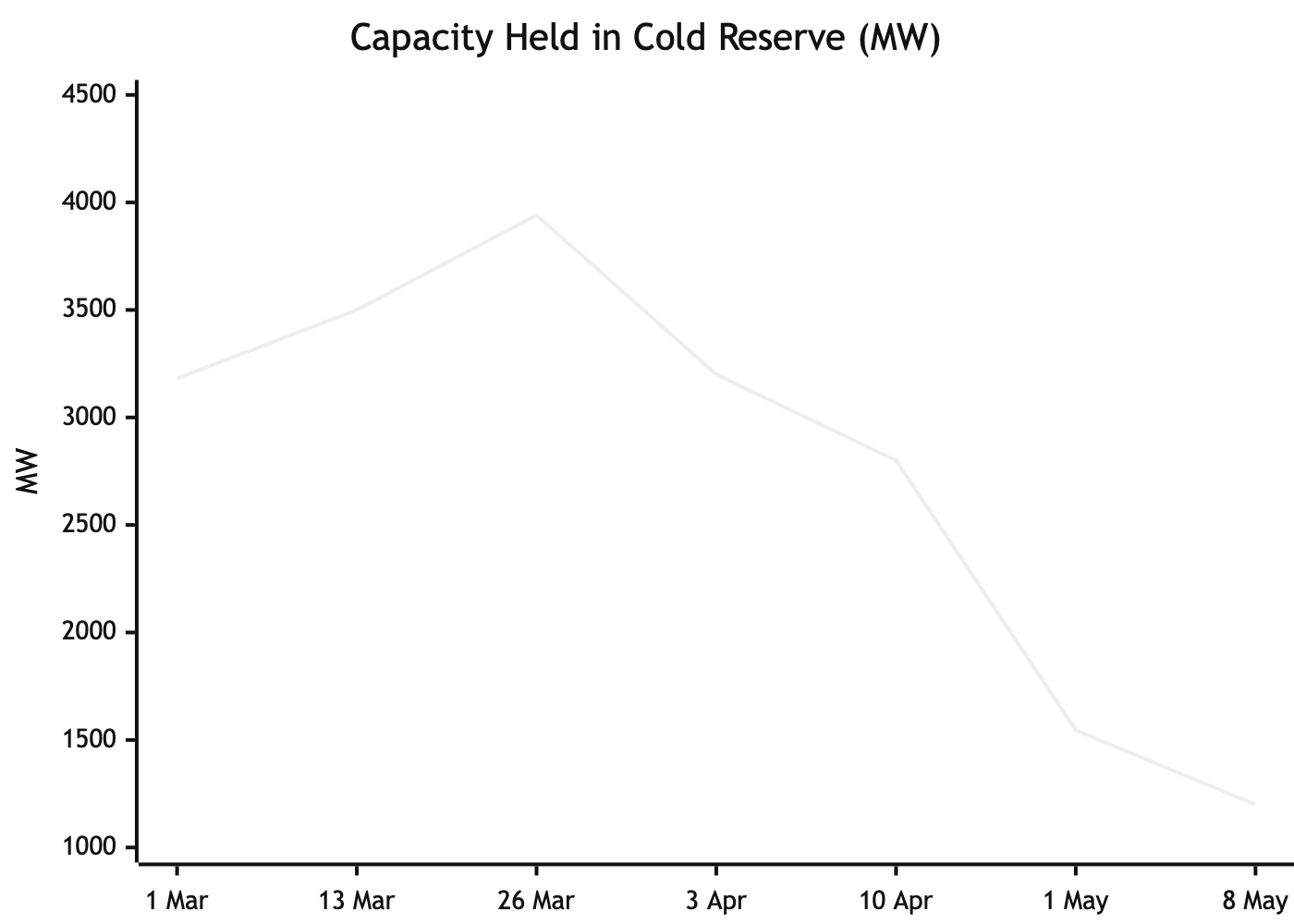
Image credit: GBA
The rapid depletion of cold reserve capacity highlights how quickly reserve margins are tightening as winter demand accelerates across the country.
The trend suggests Eskom is increasingly reliant on keeping a larger portion of its ageing coal fleet continuously online in order to maintain grid stability. This leaves the system more exposed to the risk of sudden major unit failures during periods of peak demand and the deployment of expensive Open Cycle Gas Turbine (OCGT) generation in emergency reserve.
Despite the weakening indicators, Eskom’s overall performance remains significantly stronger than previous winters. The utility has so far succeeded in keeping unplanned outages below the critical levels that historically triggered severe load shedding events.
However, the data now points to a far narrower operational margin heading into the peak winter demand period, with system stability likely to depend heavily on Eskom’s ability to contain unplanned outages below approximately 13 GW while maintaining adequate emergency reserves.
The combined trends show a clear seasonal tightening in Eskom’s system between March and early May 2026:
| Indicator | Trend into Winter | Implication |
| EAF | Falling | Less available generation |
| Unplanned Outages | Rising | Greater plant stress |
| UCLF | Rising | More forced outages |
| PCLF | Moderately rising after March lows | Maintenance becoming constrained |
| Cold Reserve | Falling sharply | Reserve margins tightening |
Author: Bryan Groenendaal