- Eskom has called an urgent meeting with lenders after revising its unbundling plan to keep transmission within the holding company.
- Creditors and investors warn the new structure weakens transparency and increases financial risk.
- The shift could jeopardise 8.3 billion dollars in Just Energy Transition Partnership funding and delay grid expansion.
Eskom is set to convened an urgent meeting with its creditors, following growing opposition to a revised strategy to unbundle South Africa’s state owned power utility.
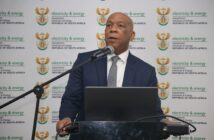
The updated approach, approved by Electricity and Energy Minister Kgosientsho Ramokgopa, introduces what Eskom describes as a phased transition. Under the plan, the National Transmission Company South Africa will remain a subsidiary of Eskom Holdings rather than becoming a fully independent entity.
This marks a departure from earlier commitments made to the market. When unbundling was first announced by President Cyril Ramaphosa in 2019, the process was framed as a clean separation into stand-alone generation, transmission and distribution companies. That model was widely seen as essential to opening the electricity market, improving governance and managing Eskom’s debt more effectively.
Local lenders and asset managers say the revised structure was introduced without adequate consultation. Investors including Futuregrowth Asset Management argue that keeping transmission within the holding company undermines contractual certainty and exposes existing lenders to structural subordination if new debt is raised at subsidiary level.
Eskom and government officials have defended the approach, warning that a rapid and complete separation could trigger cross defaults across Eskom’s roughly 400 billion rand debt stack and cause a severe liquidity crunch. The utility has also stated that the structure is consistent with the Electricity Regulation Amendment Act.
However, analysts and industry experts caution that the compromise carries significant long term risks. Eskom must finance the construction of up to 14,000 kilometres of new transmission lines, at an estimated cost of R440 billion, to support the integration of renewable energy and reduce reliance on coal. Questions remain over whether investors will back this expansion without an independent system operator.
The revised unbundling plan has also raised concerns among international partners backing South Africa’s energy transition. The US$8.3 billion Just Energy Transition Partnership, supported by several European governments, is conditional on meaningful structural reform. Funders have previously signalled that transmission independence is a key requirement.
Political pressure is mounting as well. The Democratic Alliance has accused the minister of entrenching Eskom’s monopoly and blocking fair access to the grid for independent power producers. The party has demanded an urgent parliamentary briefing and warned that failure to implement genuine reform could leave taxpayers responsible for the full cost of grid expansion.
As Eskom engages creditors this week, the outcome of the talks will be closely watched by investors, project developers and international partners. The decisions taken now will shape not only Eskom’s balance sheet, but the pace and credibility of South Africa’s energy transition.
Author: Bryan Groenendaal