- According to South Africa’s National Treasury, by the year 2025/26, the country’s state-owned power utility, Eskom, will have received a staggering R496 billion in bailouts since 2008/09.
- On the 16th October, 2024, the country’s National Treasury gave the Standing Committee on Appropriations an update on the first-quarter performance of various state-owned enterprises, covering the period from April to June 2024.
- Alarmingly, they heard that Eskom has received R23 billion from the fiscus during the second quarter of the 2024/25 year via the use of the ‘deviations’ Regulation 16A6.4 for the “ongoing energy crisis”.
- This includes R7 billion was paid to a pump and valve company in two separate lots.
National Treasury told the committee that bailouts have contributed enormously to low levels of service delivery, as they have taken the lion’s share of funds that could have been directed to other pressing issues. The government has dispersed bailouts to key SOEs, with Eskom, South African Airways (SAA), the South African National Roads Limited and Transnet being the biggest recipients of government bailouts.
Eskom unsustainable debt of over R423 billion. The goal of the bailouts is to strengthen the utility’s balance sheet, enabling it to restructure and undertake the investment and maintenance needed to support security of electricity supply. Last year, following broad consultation, government proposes a debt-relief arrangement covering R254 billions of Eskom debt (about R168 billion in capital and R86 billion in interest) over the next three years, with strict conditions to safeguard public money.
This will take the form of advances of R78 billion in 2023/24, R66 billion in 2024/25 and R40 billion in 2025/26. These amounts represent Eskom’s full debt settlement requirement over the next three years. They will be financed through the R66 billion medium- term expenditure framework (MTEF) baseline provision announced in the 2019 Budget, and R118billion in additional borrowing over the MTEF period. Additionally, in 2025/26, government will directly take over up to R70 billions of Eskom’s loan portfolio.
But members of the committee expressed their concerns that Eskom has breached one of the conditions of the bailout, which directed it to dispose of its Eskom Finance Company by 31 March 2024 while National Treasury had to reduce its debt allocation by R2 billion.
Eskom has also received R23 billion from the fiscus during the second quarter of the 2024/25 year. National treasury confirmed that the funding was procured via the use of the ‘deviations’ Regulation 16A6.4 which states that should it be “impractical to invite competitive bids” then the procurement could be carried out by “other means”.
The R23.32 billion was the accumulative amount of 639 deviation requests processed in three months. This emergency funding of Eskom for the last three months adds to the R18.65 billion procured in the same way during the first quarter of the 2024/45 period, bringing the full bill to R41.97 billion so far.
Treasury cited the main reasons for the Eskom funding deviations was the “ongoing energy crisis”. The committee raised eyebrows when they heard that R7 billion was paid to a pump and valve company in two separate lots.
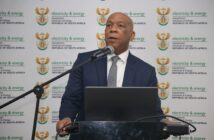
The Chairperson of the committee, Mr Mmusi Maimane, said: “What is transpiring is that due to a government-created energy crisis, the very same government is panic spending to keep the lights on, with very little accountability or oversight”.
“The committee seeks to ensure that there’s better accountability with line functions from SOEs. And, as we review their annual performance plans, there’s a call to limit bailouts to these institutions because when they underperform there are going to be serious problems for all South Africans,” concluded Maimane.
Author: Bryan Groenendaal