- Draft cost benefit analysis finds FGD health benefits significantly lower than capital and operating costs.
- Air quality in Waterberg Bojanala Priority Area largely compliant with national SO2 and NO2 standards.
- Eskom Air Quality Offset Programme shows benefit cost ratio above 30 and strongest health return.
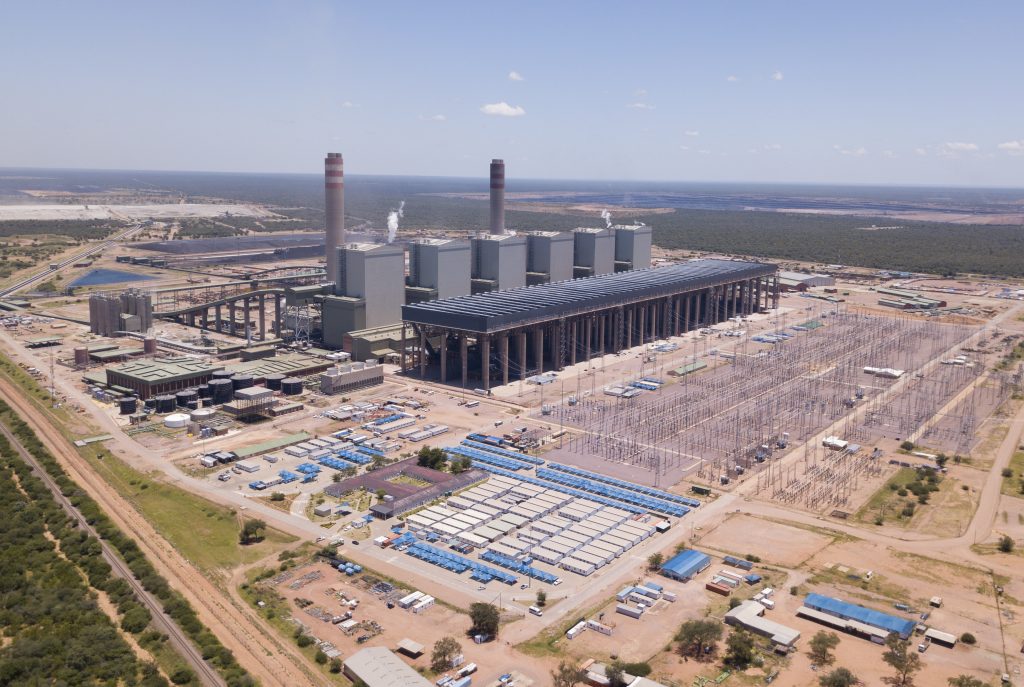
South Africa’s state owned energy utility, Eskom, has released a draft Cost Benefit Analysis on sulphur dioxide emission reduction at Medupi Power Station for public comment, in line with a directive issued on 31 March 2025 by then Forestry Fisheries and the Environment Minister Dr Deon George.
At full capacity, the Medupi Coal Power Station is projected to emit approximately 25 to 30 million tonnes of carbon dioxide per year. It is one of the most carbon-intensive plants in the world. As of 2024, it frequently exceeds minimum emission standards for sulphur dioxide and has reported high nitrogen dioxide levels. Read more
The assessment, undertaken by an independent service provider, responds to a Ministerial Record of Decision on Eskom’s application for exemption from Minimum Emission Standards for sulphur dioxide at Medupi. The draft report and a non technical summary are open for public comment from 24 February to 26 March 2026.
Stakeholders including communities, environmental organisations, industry and government institutions are invited to review the documents, which are available on Eskom’s website. An online public information session is scheduled for 10 March 2026.
The analysis, conducted in line with World Health Organisation guidelines, evaluates the financial costs and associated health benefits of three flue gas desulphurisation technologies at Medupi, namely wet FGD, semi dry FGD and dry FGD. The plant is located in the Waterberg Bojanala Priority Area.
Ambient air quality data for the period under review indicates that the area is materially compliant with National Ambient Air Quality Standards for SO2 and nitrogen dioxide. Particulate matter levels do not meet ambient standards, although the study attributes this largely to ground level sources rather than stack emissions from Medupi. Continued operation of existing abatement equipment is considered unlikely to result in non compliance with SO2 and NO2 standards.
Across all three FGD technologies, benefit cost ratios remain well below 1 under multiple end of life and sensitivity scenarios. This indicates that the monetised health benefits are substantially lower than the capital and operating expenditure required.
Wet FGD offers the highest SO2 removal efficiency and the largest health benefit of the three options. However, its total lifetime project cost over 45 years is estimated at R383bn nominal, including capital and operating costs that would need to be recovered through electricity tariffs.
Semi dry and dry FGD options carry even higher lifetime costs of R534bn nominal and R408bn nominal respectively, driven by elevated operating expenses. Health gains under these options are lower, resulting in less favourable benefit cost outcomes. Eskom estimates that implementing FGD could add approximately 4c per kWh to electricity prices.
The study also assessed six alternative emission reduction scenarios. These include Eskom’s Air Quality Offset Programme focused on clean cooking and household energy interventions, Small Modular Reactors, Long Duration Energy Storage, coal beneficiation, High Efficiency Low Emissions coal technology and Carbon Capture Utilisation and Storage.
The Air Quality Offset Programme demonstrates the strongest economic case, with estimated health benefits exceeding costs by more than 30 times. The five year programme carries a lifetime cost of R5.1bn nominal, recoverable through electricity tariffs. Based on pilot results, Eskom indicates a high probability of successful implementation, with health benefits primarily realised in the Highveld region.
Small Modular Reactors and Long Duration Energy Storage are projected to generate significant health benefits, particularly given their broader deployment potential, although their additional power generation benefits were not quantified in the study.
Coal beneficiation, High Efficiency Low Emissions technology and Carbon Capture Utilisation and Storage show measurable health benefits, but at costs exceeding quantified returns. Coal beneficiation costs are estimated between R128 billion and R386 billion nominal. High Efficiency Low Emissions ranges from R8 billion to R10 billion nominal. Carbon Capture Utilisation and Storage carries the highest cost band, ranging from R1,811billion to R13,837 billion nominal.
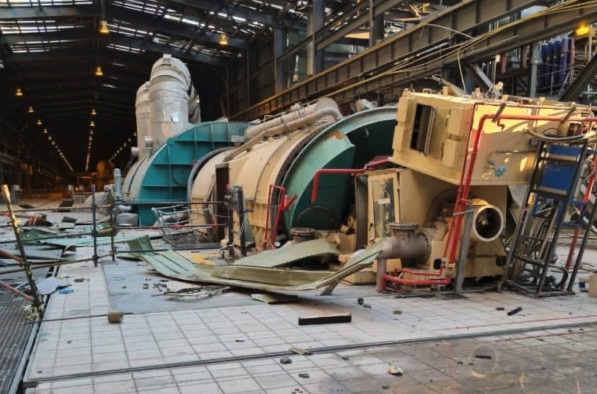
The aftermath of the internal hydrogen explosion within the 800 MW generator of Unit 4 at Medupi Power Station. Image credit: Chris Yelland – Twitter
Questions remain on Medupi Unit 4 generator explosion and bypass of flue gas desulphurisation systems at Kusile
Separately, questions remain regarding Eskom’s investigation into the Unit 4 generator explosion at Medupi on 8 August 2021. The blast occurred during hydrogen displacement procedures and caused extensive damage to the generator. While a preliminary investigation indicated that air was introduced into the generator while hydrogen was still present, creating an explosive mixture, no final public report has been issued detailing responsibility or total repair costs.
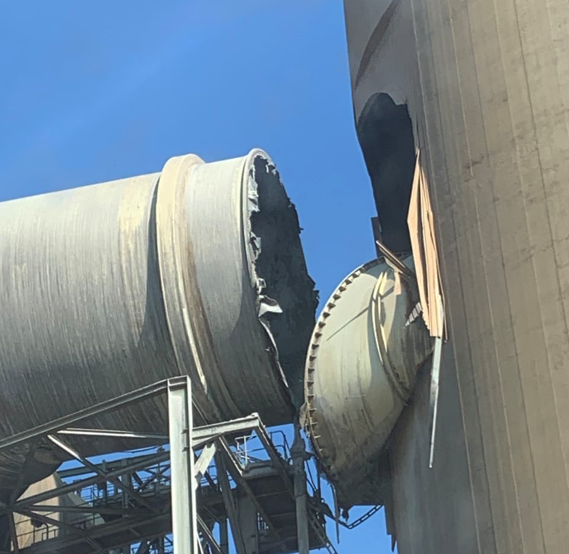
Unit 1 flue gas duct coupler to the chimney stack disconnected. Image credit: Karin Morrow – Twitter
Eskom previously received approval from then environment minister Barbara Creecy to bypass flue gas desulphurisation systems at Kusile Power Station to enable temporary repairs following structural failure of a chimney in October 2022. The arrangement allowed Units 1, 2 and 3 to operate using temporary stacks, resulting in unabated SO2 and elevated mercury emissions. The Department of Forestry Fisheries and the Environment granted postponement of compliance with Minimum Emission Standards until 31 March 2025.
Author: Bryan Groenendaal