- New centre links South Africa’s energy transition with climate smart agriculture and local job creation.
- Project targets skills development and sustainable employment in Mpumalanga communities.
- Pilot demonstrates how repurposed energy infrastructure can support future economic activity.
Eskom, the Government of the Netherlands and the Mpumalanga provincial government have officially launched the Grootvlei Climate Smart Horticulture Centre at the Grootvlei Power Station, marking a significant step in aligning South Africa’s Just Energy Transition with new economic opportunities in agriculture, skills development and community based enterprise.
The launch, which took place on Tuesday, signals a shift from concept to implementation in demonstrating how former or repurposed energy infrastructure can be used to support climate resilient economic activity beyond electricity generation. The Centre focusses on practical training, value chain development and climate smart food production, rather than large scale commercial output at this early stage.
The initiative is being implemented under the leadership of the Enterprising Africa Regional Network, with support from the Mpumalanga Green Cluster and a group of South African and Dutch partners including Seed2Feed Foundation, Holland Green Tech, Ridder, Bosman Van Zaal, Van der Hoeven and Van der Straaten Acampo, Svensson and Control Union.
Tangible outcomes are already emerging. Eight community members from the Dipaleseng Municipality are currently undergoing training as greenhouse facilitators. In addition, 75 local agripreneurs will enter an Agripreneur Development Programme starting in April 2026. Each participant is expected to create further employment opportunities within the community, with the programme projected to support substantial sustainable job creation by 2030.
The Centre forms part of Eskom’s Just Energy Transition Programme and serves as a pilot for place based economic development linked to the energy transition. Its emphasis is on building practical skills, strengthening local participation and developing resilient agricultural value chains suited to changing climate and market conditions.
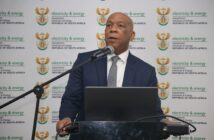
The launch event was attended by the Minister of Electricity and Energy, Dr Kgosientsho Ramokgopa, representatives of the Government of the Netherlands, and provincial and local government leaders. The programme included a tour of the facility, demonstrations of selected climate smart technologies and engagement with stakeholders from government, industry, Eskom leadership and the local community.
Roald Lapperre, Vice Minister in the Ministry of Agriculture, Fisheries, Food Security and Nature in the Kingdom of the Netherlands, highlighted the long term nature of the partnership, noting that progress should be measured by meaningful economic participation and real outcomes for people. He said the Centre is designed to connect local and international role players across the agricultural value chain, strengthening resilience to economic and climate pressures.
The collaboration draws on Dutch expertise in high tech horticulture, efficient water use, energy smart production systems and value chain organisation, while placing South African leadership and local implementation at the centre of the project’s growth ambitions for Mpumalanga.
Eskom Board Chairperson Mteto Nyati said the project demonstrates how coordinated action between government and international partners can protect livelihoods as South Africa transitions to a lower carbon economy. He acknowledged the leadership of the Minister of Electricity and Energy, the investment by the Netherlands and its partners, and the support of provincial and local government.
Beyond its immediate impact, the Grootvlei Climate Smart Horticulture Centre is expected to inform the development of a broader agri economic hub that integrates agriculture, skills development and logistics, with increasing private sector participation over time.
The project underscores that South Africa’s energy transition is not only about changing power sources, but about building new economic futures for communities, land and local economies.
Author: Bryan Groenendaal