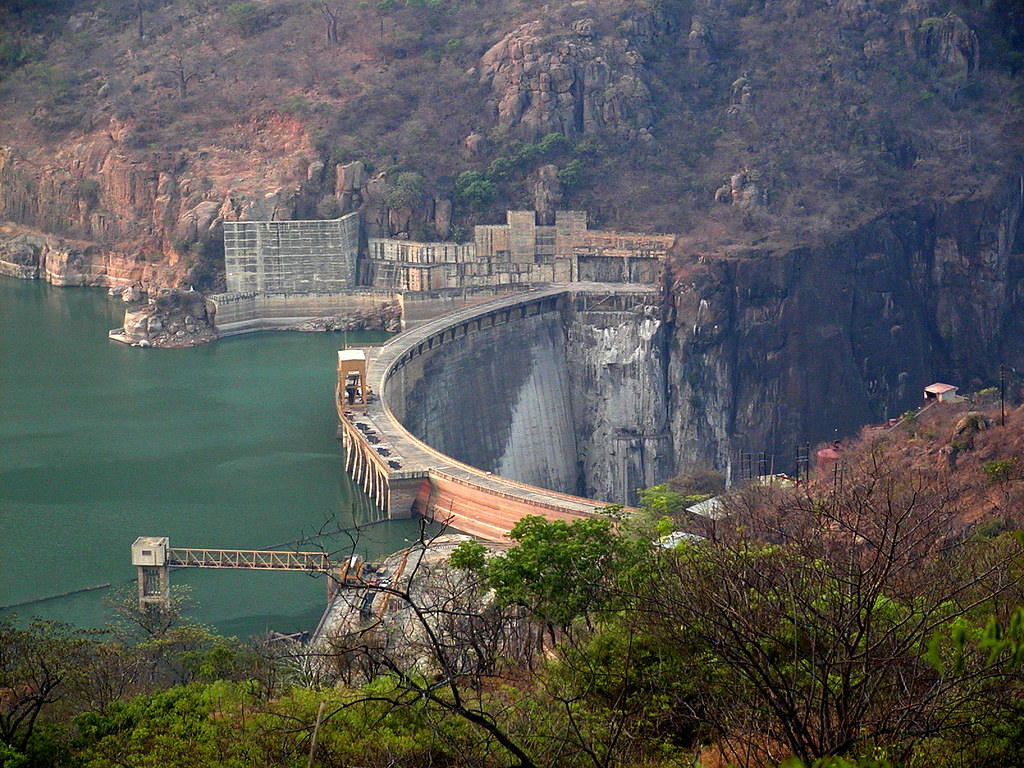
- The Cahora Bassa Hydroelectric Plant (HCB) in Mozambique is facing ‘management measures’ to deal with the effects of ‘the continuing severe drought, influenced by the occurrence of the El Niño phenomenon’ in Southern Africa.
The company that these measures have been in place since July and are intended to ensure ‘that the production planned for this year will potentially be achieved, offset by exceeding the targets for the first half of the year’.
‘The measures, implemented on a scientific basis and according to the technical data available, are aimed at safeguarding the hydraulic-operational safety of the dam and related infrastructure, as well as the fulfilment of the commercial commitments made and ensuring that water will be available for production in the coming years,’ said HCB.
HCB says that in these measures, it is keeping in mind ‘the sustainability of the project, balancing the need to preserve water storage with hydroelectric generation’ and that it is ‘collecting and systematising all the relevant information, both hydro-climatological information on the Zambezi basin and information on the management of upstream dams’, recognising that the southern African region in general ‘continues to experience one of the worst droughts in the last thirty years’.
The Cahora Bassa reservoir is the fourth largest in Africa. It has a maximum length of 270 kilometres and 30 kilometres between banks, occupies 2,700 square kilometres, and has an average depth of 26 metres.
The company points out that at the end of the first half of September, the level of the HCB reservoir was 312.87 metres, corresponding to 44.1% of its useful capacity. This is a more comfortable situation compared to the upstream dams, which have much lower storage levels and are implementing one of the most severe restriction regimes in energy production, a fact that negatively affects the release of water downstream.
Based on official seasonal climate forecasts of ‘high probabilities of normal rainfall with an above-normal trend over the Zambezi Basin during the 2024/25 rainy season, favoured by the La Niña phenomenon’, it predicts ‘great possibilities for a reasonable recovery of Cahora Bassa’s storage during 2025, which could gradually make it possible to achieve satisfactory hydro-energy production in subsequent years.
Source: Lusa