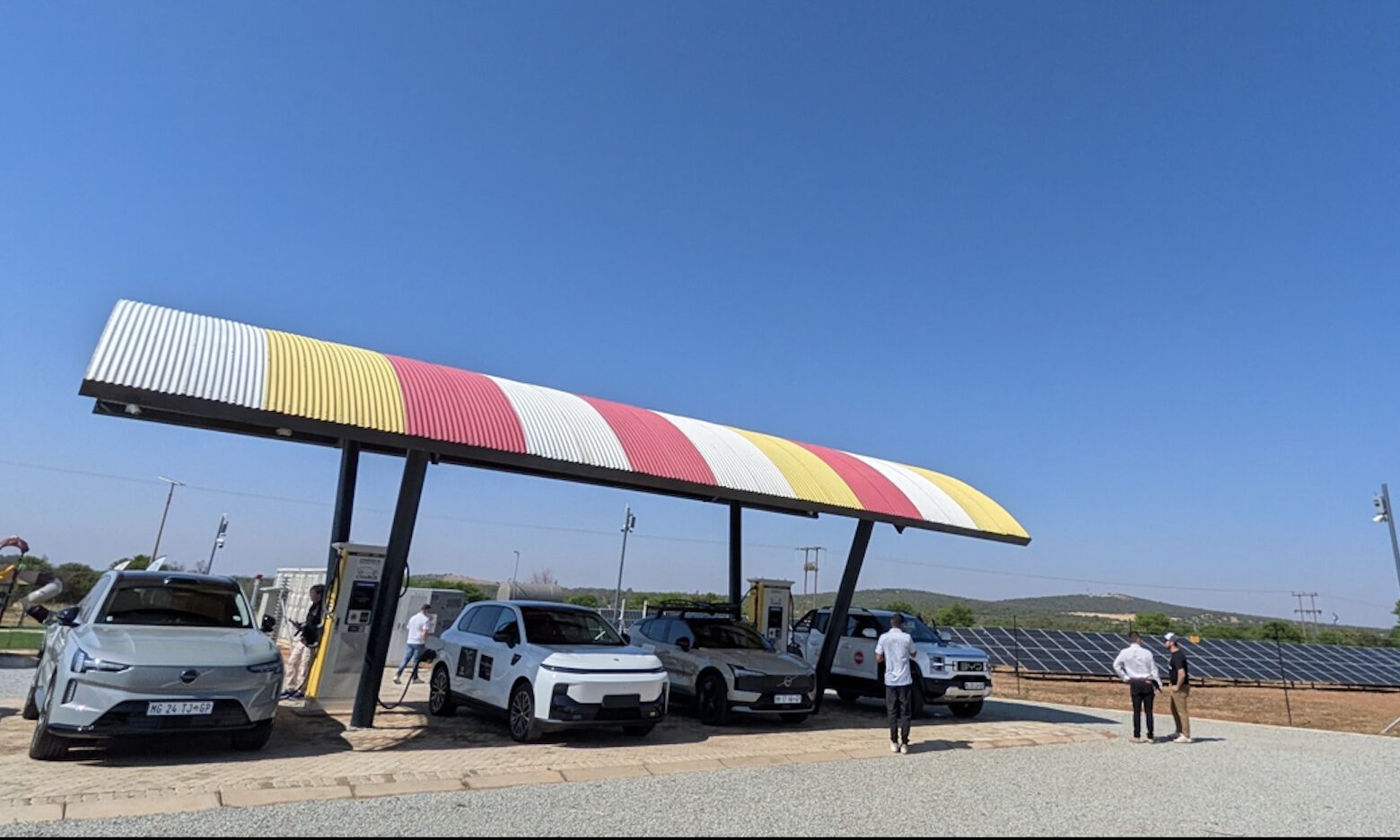
- NAAMSA’s 90th anniversary and South African Automotive Week 2025, in Gqeberha, was the destination for electric vehicle road trippers from Johannesburg, Durban and East London.
“The automotive sector in South Africa is a vital component of South Africa’s manufacturing industry, and a significant contributor to employment and gross domestic product,” says Hiten Parmar, Executive Director of The Electric Mission. “The opportunity for growth in the sector is highlighted by the increase in new vehicle sales, which are up 24.3 per cent on the figures a year ago.”
The total distance of the electric vehicle road trip covered more than 4,000km with six 100 per cent electric vehicles, and a few hybrids for the 50+ participants. The electric vehicles used on the 2025 road trip included the BYD Sealion, Leapmotor B10, Mini Cooper SE, Volvo EX30 Cross Country, EX90, and XC40. These road trippers act as ambassadors for the electric vehicle transition in South Africa while showcasing the growth and innovation in national charging infrastructure. One of the first charging stops included a fully off-grid charging hub in Wolmaransstad, North West, that fast charged six vehicles simultaneously, powered by solar only.
“This second road trip in the lead to SA Auto Week, themed as ‘Escaping the Noise’, proves that electric mobility in South Africa is not only possible today, but practical for local drivers and the locally available electric vehicle models” says Parmar. “There is a diverse selection of public charging infrastructure en route between the major centres, and it is growing across multiple operators and investors.” The annual Global EV Outlook publication of the International Energy Agency profiles South Africa within the top 20 globally on the electric vehicle to charger ratio.
The Eastern Cape province, the foundation of South Africa’s automotive industry in 1924, leads the public charging infrastructure diversity in South Africa, with the most versatile network of public fast chargers providing seamless electric mobility from cities through to rural areas. “Urban travel is crucial to the electric mobility transition, but in South Africa linking urban and rural areas is of huge importance to connect communities separated by geography and employment opportunities,” says Parmar.
The 2025 road trip built on the success of last year, which saw participants travel from Johannesburg to Cape Town on a route covering over 2,000 kilometres with five 100% electric vehicles. “Globally, electric vehicle models and pricing are transforming, and now even here in South Africa, more affordable models are making it to market, making electric mobility more accessible” says Parmar.
Participating in an opening panel discussion at SA Auto Week 2025, Parmar emphasised that the state of play of the automotive market critically requires a shift in gears. Well-targeted demand and supply policies, and infrastructure investments will increase the adoption of emerging technologies and support national ambitions for competitive industrial transformation.
With Europe being South Africa’s primary market for exports of locally produced vehicles, South Africa’s automotive policy and supporting industry needs to critically align local vehicle and component production with Europe’s timeline of 2035 for the ban of internal combustion engine vehicles imports. During the recent State of the Union address, EU Commission president Ursula von der Leyen highlighted that ‘No Matter What, the Future Is Electric’.
Source: The Electric Mission
The Electric Mission is a not-for-profit organisation based in South Africa with extensive experience of the electric mobility and energy sector through its leadership, and Board of Directors. It is represented within a number of local and international forums on championing the advancement of the electric mobility ecosystem towards empowering sustainable and equitable mobility and energy systems for all.