- South Australia-headquartered Sparc Technologies green hydrogen pilot plant is on track to commence construction in early 2025, 60 kilometres north of Adelaide at the University of Adelaide’s (UoAs) Roseworthy campus.
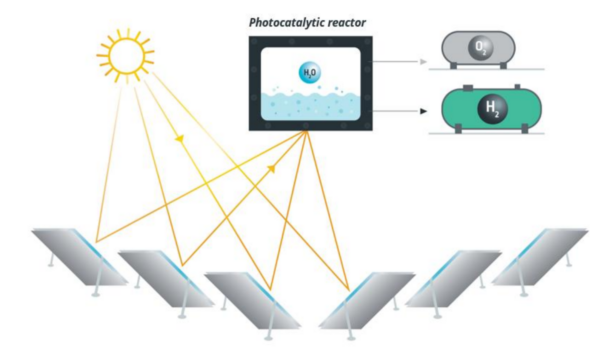
- The Sparc Hydrogen project will develop next generation hydrogen systems using photocatalytic water splitting (PWS) technology that does not need an electrolyser and is operated by a linear Fresnal (LFR) concentrated solar system (CSS).
- A Fresnel lens is light-weight and capable of elevating the density of solar energy.
Sparc Hydrogen is a joint venture (JV) between Sparc Technologies, the UoA and Australian mining giant Fortescue, with the pilot’s Stage 2 formal commitment completed to include Sparc’s input of $1 million (USD 620,000) and Fortescue, $1.4 million.
Sparc Technologies Managing Director Nick O’Loughlin said a significant amount of work has gone into this positive investment decision between the partners.
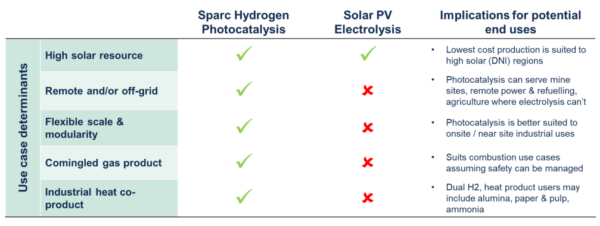
“This is a reflection on the research and development team, strong IP position and high potential of the technology to unlock low-cost green hydrogen without relying on electrolysers, stretched electricity grids and related infrastructure,” O’Loughlin said.
Stage 2 activities will be focused on pilot plant construction and reactor testing along with ongoing laboratory testing of PWS reactors under a range of conditions.
Sparc Hydrogen believes that the pilot plant will represent a globally leading facility for research and development, and commercialisation of PWS reinforcing Sparc Hydrogen’s first mover position in this emerging direct solar to hydrogen technology.
Fortescue Director of Research and Development Michael Dolan said Sparc’s home-grown innovation has the potential to make green hydrogen an even more competitive energy resource by decoupling its cost from the cost of green power.
“The phase 2 pilot plant will enable this promising technology to be evaluated at a meaningful scale ahead of potential commercial deployment in the future,” Dolan said.
Key advantages of the pilot plant include not needing electricity to produce green hydrogen and cutting its production energy costs, as sunlight is the only energy input driving the process.
University of Adelaide Deputy Vice Chancellor (Research) Professor Anton Middelberg said the University is pleased to commit to the next stage of work on photocatalytic water splitting, based on research work of Professor Greg Metha and his team.
“The core IP developed by Professor Metha relates to PWS reactors operating under concentrated solar energy. The Stage 2 investment into constructing a pilot plant enables us to stress-test catalysts developed globally and places South Australia in a position of competitiveness in terms of testing innovative hydrogen technologies,” Middelberg said.
Design of the pilot scale PWS reactors has been finalised with drawings submitted to manufacturing contractors for review and an agreement for the supply of photocatalyst materials from Japan’s Shinshu University is ready.
Author: Ev Foley
This article was originally published in pv magazine and is republished with permission.