
- Africa could dramatically ease energy poverty and accelerate economic growth by expanding both renewable and conventional power generation, according to a new Horizons report from research and consultancy group Wood Mackenzie.
Despite receiving just over 2% of global energy investment, the continent remains severely energy-poor. Around 600 million Africans still lack access to electricity, while four-fifths of the population rely on traditional fuels for cooking.
“Africa is incredibly rich in natural resources, yet energy poverty remains widespread,” said Mansur Mohammed, Africa Upstream & Carbon Management New Business Development at Wood Mackenzie. “The minerals that power the world’s clean energy transition come from Africa, while the continent itself remains energy-poor.”
Wood Mackenzie forecasts that Africa’s installed solar and wind capacity will grow by nearly 600% over the next decade. Although the pace of new solar installations slowed in 2024, total capacity is expected to rise from 11.4 GW in 2021 to 31 GW by the end of this year. The continent currently holds less than 2% of global solar capacity.
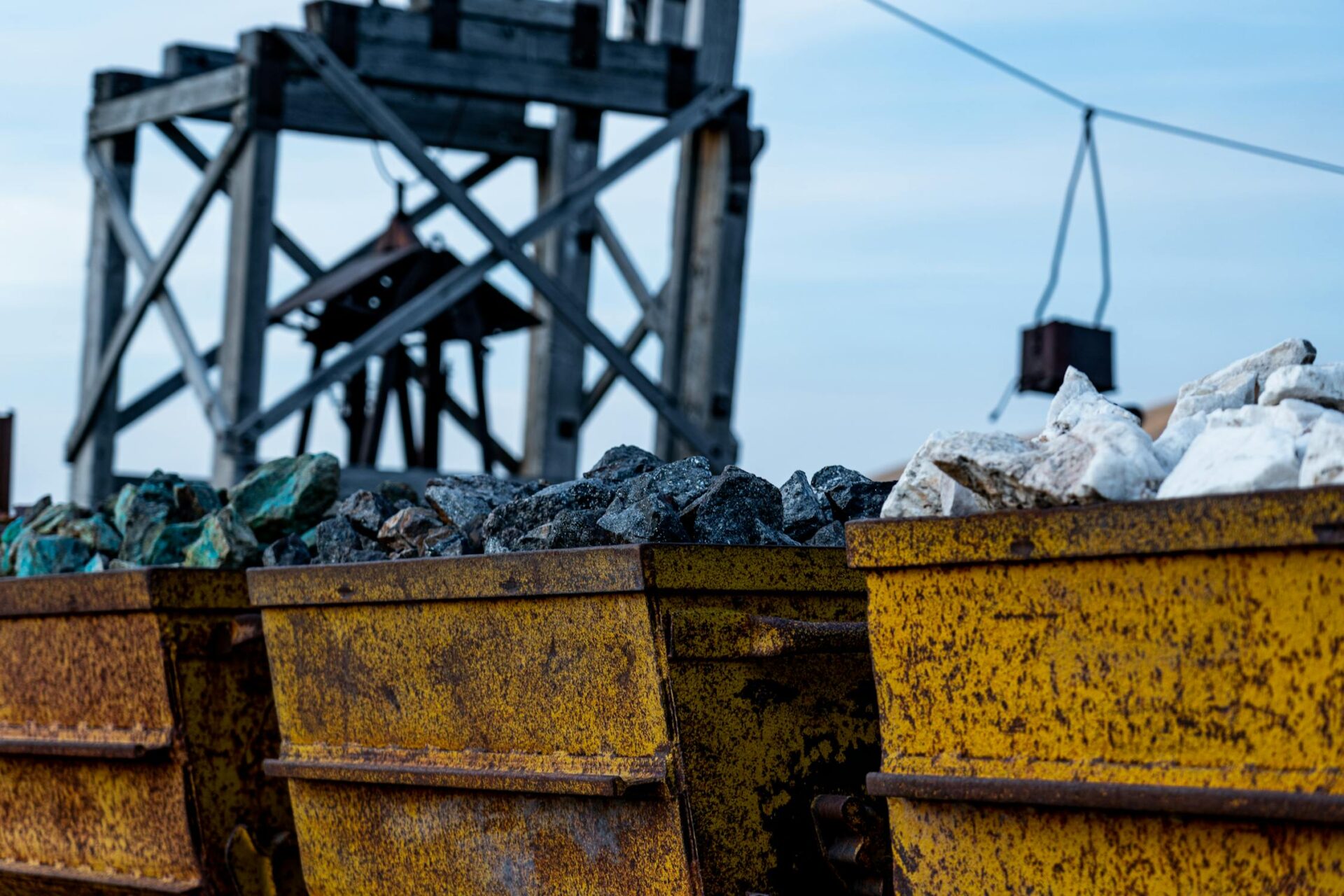
Africa also dominates global production of many critical minerals essential for low-carbon technologies. It provides more than two-thirds of the world’s cobalt and around 20% of its copper, as well as significant quantities of lithium, manganese, platinum and rare earth elements. However, most of these raw materials are exported to China for processing, limiting domestic value creation.
Analysts argue that Africa could leverage its mineral wealth more effectively by negotiating energy-for-minerals partnerships, particularly with Chinese investors who have shown strong appetite for large-scale resource development.
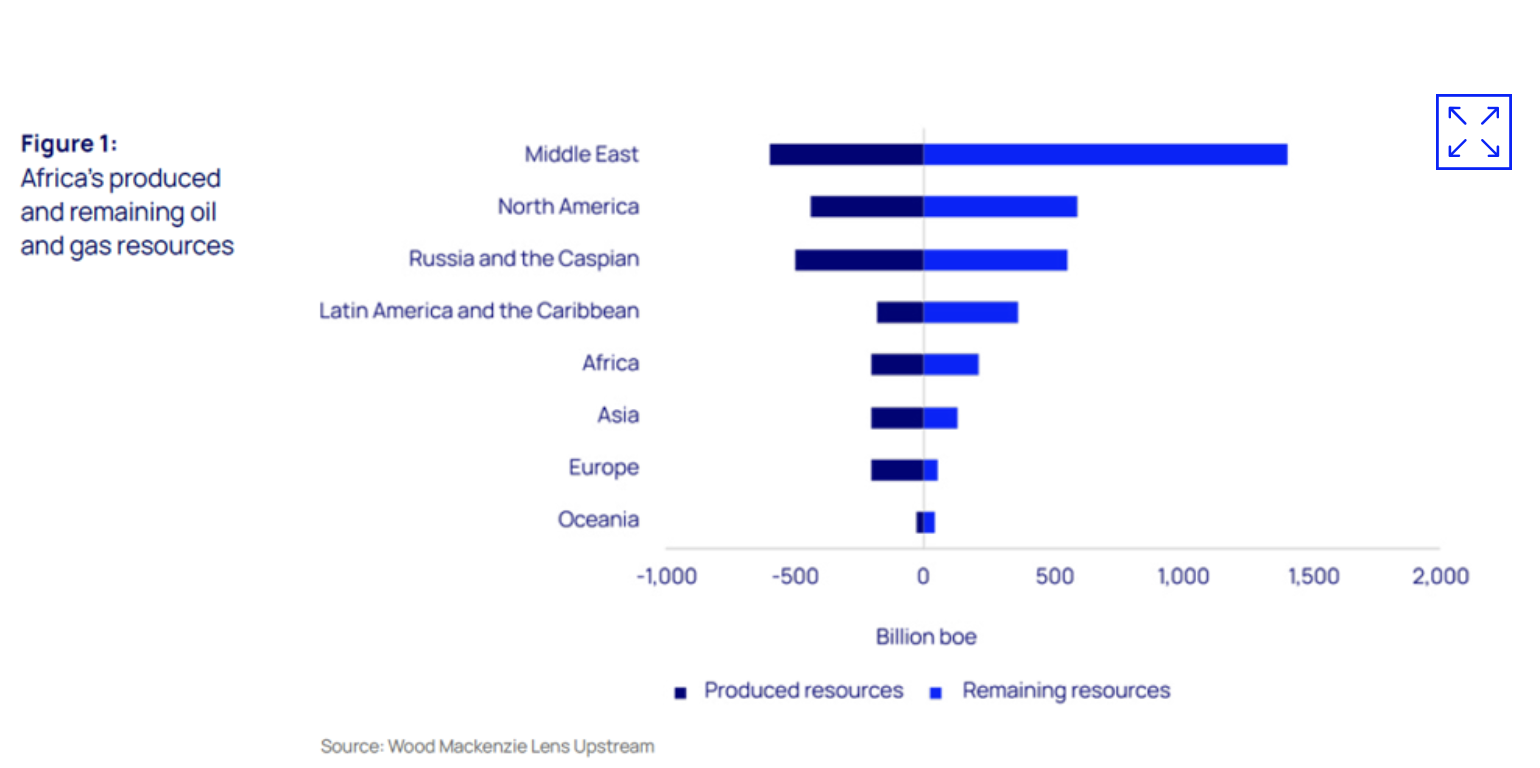
At the same time, Africa’s vast oil and gas reserves remain underused. Only one-third of discovered hydrocarbons have been commercialised – one of the lowest development rates globally. Poor governance, weak regulation and a lack of affordable finance continue to deter investment.
Wood Mackenzie estimates that the continent’s oil and gas sector will generate around US$109 billion per year in government revenues through to 2030, with the potential for significantly more if new projects are developed.
Several major producers are moving to increase output. Nigeria aims to double crude production to 3 million barrels per day, and boost gas output to 12 billion cubic feet per day by 2030. Angola’s departure from OPEC in 2023 was intended to enable more flexible production growth. Together, regulatory reforms in both countries have already attracted nearly US$20 billion in new project investment decisions since 2024.
Africa is also an important player in global LNG markets, providing almost 10% of worldwide supply and leading in floating LNG technology, operating six of the world’s 10 FLNG projects. Yet the continent consumes only 4% of global gas, with per-capita use far below the world average.
Governments are increasingly exploring ways to build domestic gas markets alongside export strategies, with cross-border pipeline proposals signalling stronger regional cooperation. Gas-to-power schemes are seen as one of the most cost-effective routes for monetising resources.
By 2050, Africa’s population is expected to reach around 2.5 billion, creating soaring demand for reliable and affordable energy. “The continent possesses the resources to achieve energy sufficiency,” Mohammed said. “The challenge lies in mobilising capital, improving governance, and deploying innovative solutions.”
Africa is responsible for just 3.5% of global carbon emissions, and the report argues that a balanced strategy – accelerating renewable deployment while responsibly developing hydrocarbons – offers the most realistic path toward industrialisation and long-term energy security.
Author: Bryan Groenendaal