- Africa’s critical minerals are central to the global shift to net zero.
- Electricity reliability and transmission expansion identified as decisive for beneficiation.
- Cost of capital and regional integration flagged as key to unlocking green industrialisation.
Africa is emerging as a structural anchor in the global energy transition at a time when geopolitical tensions, supply chain realignments and aggressive industrial policy are reshaping the global order.
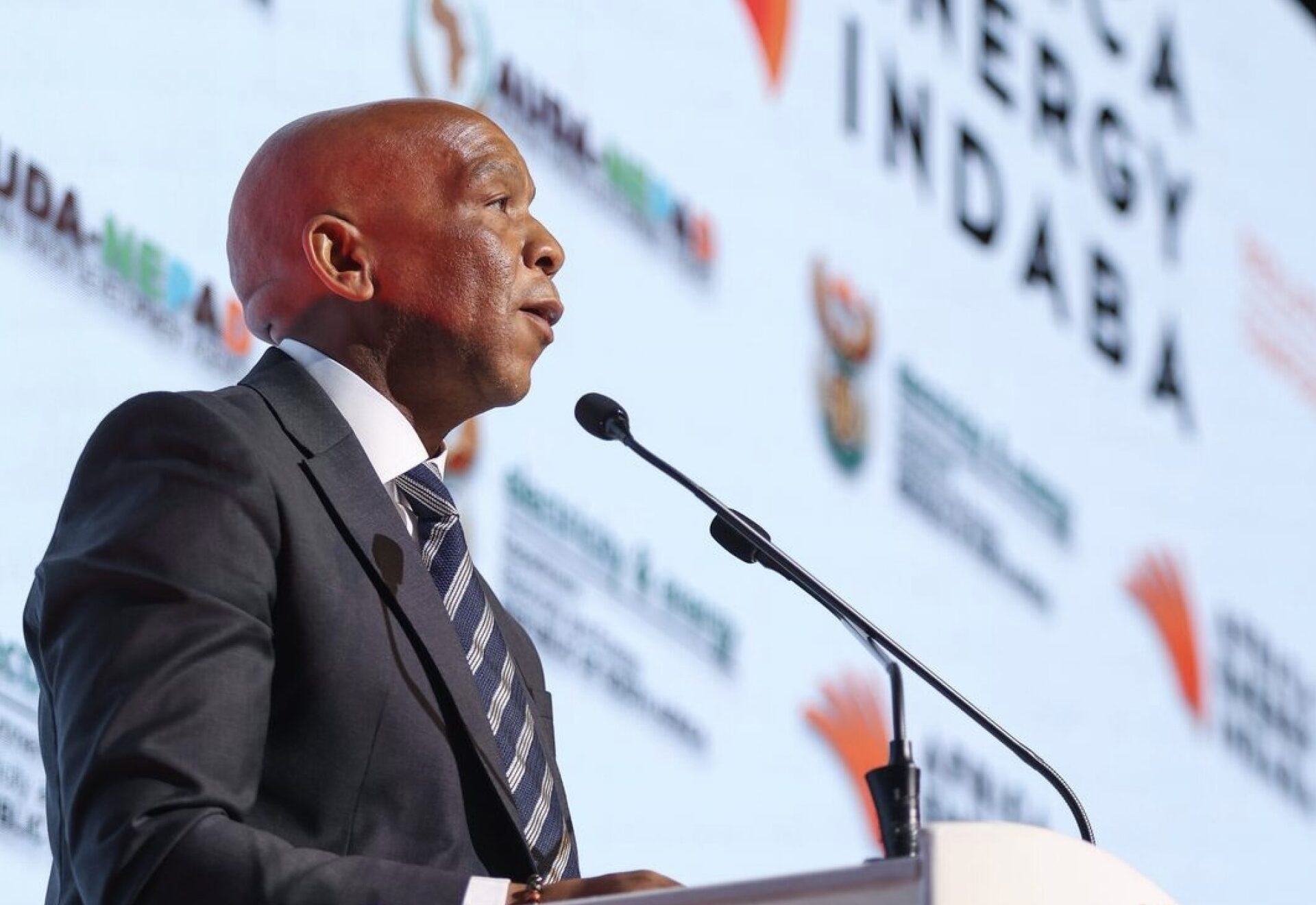
Addressing delegates at the Africa Energy Indaba 2026 held at the Cape Town International Convention Centre, South Africa’s Electricity and Energy Minister Kgosientsho Ramokgopa said the global energy system that powered successive industrial revolutions is undergoing structural transformation in real time.
He noted that major economies are deploying unprecedented subsidy regimes to secure supply chains, protect domestic manufacturing and reposition themselves within emerging clean technology value chains. In this reordering, energy has become the architecture of global power, with electricity increasingly synonymous with sovereignty.
Against this backdrop, Africa’s mineral endowment places the continent at the heart of the transition. Platinum group metals are essential for scaling the hydrogen economy. Cobalt, manganese and copper are foundational to battery technologies. Vanadium is critical for long duration storage. Uranium underpins renewed global interest in nuclear energy.
“The transition to net zero is materially dependent on Africa,” Ramokgopa said.
However, he cautioned that structural centrality does not automatically translate into structural prosperity. For decades, Africa exported raw materials while value addition and industrial advantage accumulated elsewhere. The risk now is that the global green transition could replicate historical asymmetries under a new technological banner.
The minister stressed that beneficiation must move beyond rhetoric to system design. Industrial transformation depends on reliable and affordable electricity at scale. A battery precursor facility cannot function on intermittent supply. Green steel production requires stable hydrogen and firm baseload capacity. Electrolysers demand grid resilience.
“Minerals without energy do not become industry,” he said. “Industry without transmission does not become exports, and exports without infrastructure do not become prosperity.”
Ramokgopa argued that industrialising the minerals value chain requires parallel industrialisation of the energy value chain. This includes localisation of transformers, generators, transmission lines, cables, renewable components and storage systems. Investment in local engineering capability, technical training institutions and research partnerships is equally critical to embed technological competence within African economies.
Transmission infrastructure has emerged as both a defining constraint and a defining opportunity. Each new transmission line, substation expansion and renewable energy facility should reinforce domestic manufacturing, skills transfer and enterprise development.
Regional cooperation and regulatory harmonisation across power pools were also identified as essential to unlock scale and enable cross border industrial corridors. Energy cooperation and trade integration must advance together, with infrastructure serving as the backbone of industrial zones and green manufacturing clusters.
Energy justice, Ramokgopa said, should be understood as a practical programme rooted in industrialisation and continental integration rather than a slogan.
He further highlighted the cost of capital as a structural barrier to African energy projects. Elevated risk premiums, often misaligned with actual project risk, continue to inflate financing costs and ultimately the cost of power. Addressing these distortions is critical to making projects bankable and competitive.
Energy security, he added, is not accidental but designed through forward planning. He cited South Africa’s Integrated Resource Plan 2025 as an example of how structured, long-term planning can reduce uncertainty and strengthen investor confidence.
With unparalleled renewable energy potential, vast mineral reserves and a growing population, Africa is uniquely positioned to define its role in the global transition. If aligned with disciplined planning, regional integration and fair financing, the continent can move beyond being a supplier of raw materials to become a producer of clean technologies and a centre of green industrialisation.
Ramokgopa concluded with a call for execution over rhetoric, urging stakeholders to convert continental priorities into bankable project pipelines and to build an energy system that underpins industrial growth, competitiveness and shared prosperity across Africa.
Author: Bryan Groenendaal