
- Wärtsilä successfully operates the world’s first large scale engine running on 100% hydrogen and supplying electricity to a national grid.
- Demonstration in Spain validates hydrogen’s role in balancing renewable energy systems and supporting grid reliability.
- Technology could provide sustainable power for data centres, industrial facilities and off grid applications.
Technology group Wärtsilä has successfully tested what it says is the world’s first large scale engine operating on 100% hydrogen while supplying electricity directly to Spain’s national grid.
The milestone demonstration took place at the company’s testing facility in Bermeo, northern Spain, and marks a significant advancement in the commercialisation of hydrogen based power generation. The project moves beyond hydrogen ready technology by proving that engine based power plants can operate entirely on pure hydrogen under real world grid conditions.
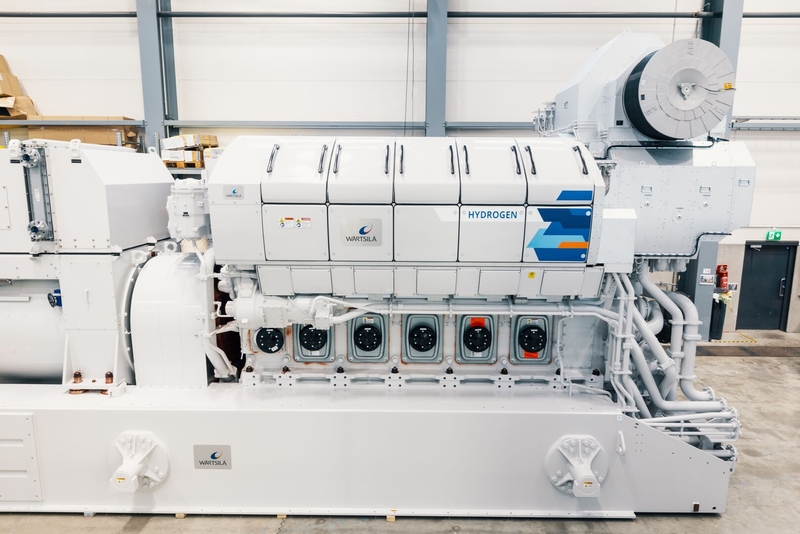
The trial centres on the Wärtsilä 31H2 engine, a hydrogen fuelled version of the company’s Wärtsilä 31 platform, which is widely recognised as one of the most efficient multi fuel four stroke engine platforms in operation today. Wärtsilä says the 31H2 is currently the world’s largest pure hydrogen engine, with performance validation ongoing at the Bermeo facility.
The achievement comes as countries accelerate renewable energy deployment and seek technologies capable of maintaining grid stability during periods of low wind and solar generation. Global renewable energy capacity is expected to increase by almost 4,600 GW by 2030, increasing the need for flexible power generation solutions that can respond rapidly to fluctuations in supply and demand.
Hydrogen is increasingly being viewed as a critical enabler of the energy transition. Green hydrogen can be produced using renewable electricity and generates no carbon emissions when used as a fuel. It can also act as a long duration energy storage medium, absorbing surplus renewable generation and supplying power back to the grid when required.
Related news: Africa’s cement industry and the push for energy security
Rasmus Teir, Director of Technology Strategy and Decarbonisation at Wärtsilä, said the successful trial demonstrates the future role of hydrogen engines in renewable energy systems.
“As countries rapidly scale wind and solar energy, one of the biggest challenges facing the energy transition is maintaining reliable electricity supplies sustainably during periods of low renewable generation or spikes in demand. Today, our Wärtsilä 31H2 hydrogen engine is operating on 100% hydrogen and supplying power to Spain’s national grid, demonstrating that large scale hydrogen engines can provide the flexible and dispatchable sustainable power needed to support future renewable energy systems,” he said.
Teir added that while the technology has now been proven, supportive policy frameworks, investment certainty and hydrogen infrastructure will be critical to enable deployment at scale.
The Wärtsilä 31 based power plant is also being positioned as a solution for energy intensive industries, including artificial intelligence data centres, manufacturing facilities and industrial operations that require reliable and sustainable power. The technology could also play an important role in remote and off grid applications.
Spain was selected as the demonstration site due to its leadership in renewable energy deployment and ongoing efforts to reduce dependence on fossil fuels. Wärtsilä said the country provided an ideal environment to validate the performance of hydrogen power generation under real operating conditions.
The demonstration was witnessed by customers from around the world in June 2026, marking a key milestone in the commercial validation of large scale hydrogen engine technology and its potential contribution to future carbon free power systems.
Author: Bryan Groenendaal