- Community led solar pilot replaces charcoal, wood, and kerosene with electric cooking, lighting, and device charging.
- Three new solar water systems under development to strengthen climate resilience and reduce human wildlife conflict.
- Project designed to align rural energy access with conservation priorities in a sensitive ecosystem.
A community driven solar initiative is transforming energy access in Kenya’s Olchoro Oirouwa Conservancy, where Maasai households have long lived beyond the reach of the national grid.
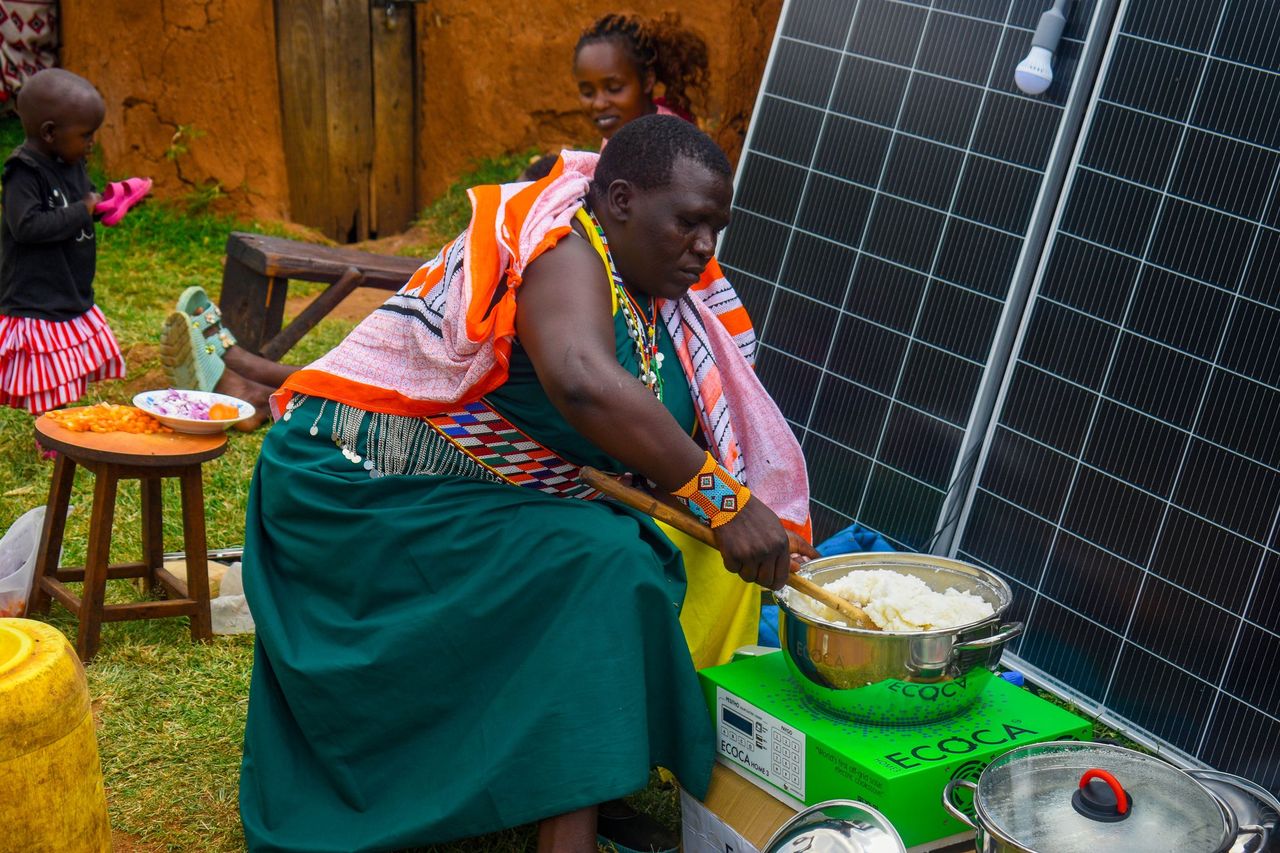
For decades, daily energy needs in this remote landscape have been met through charcoal, firewood, and kerosene. These traditional fuels are associated with indoor air pollution, environmental degradation, and rising safety risks. Now, with support from the Solar Electric Light Fund, local residents are piloting solar powered electric cookstoves alongside household lighting, mobile phone charging, and new clean water infrastructure.
Clean cooking remains a global development and climate priority. According to the United Nations, approximately 2.1 billion people worldwide lack access to safe, affordable, and low carbon cooking solutions. Indoor air pollution from traditional fuels contributes to an estimated 3.2 million premature deaths annually. In wildlife rich areas such as the Maasai Mara, fuel collection also exposes communities to significant danger.
“In our area, it is risky because there are wild animals around us. It is dangerous to go looking for firewood,” says Ann Karia, 15, from the village of Kileleoni within the conservancy. She describes encounters with elephants and buffalo near her home in a region globally known for its biodiversity and iconic wildlife.
Karia’s household is one of seven participating in an initial pilot that has deployed solar electric cookstoves, also known as electric cookers. The systems use solar energy to power cooking without fuel combustion or open flames. Three additional units have been installed at a ranger station within a local rhino sanctuary, which provides habitat for injured rhinos and employment for Maasai community members.
“It helps us conserve the environment and saves time,” says James Kipera, a chef at the sanctuary. For many participants, the systems represent their first access to electricity. Each unit includes three solar powered lamps for evening lighting and two charging ports for phones and other small devices.
The pilot phase is designed to assess performance, user experience, and alignment with local cooking practices before wider deployment across the conservancy.
The cookstove rollout forms part of a broader phased plan to expand distributed solar infrastructure. Three solar powered water systems are currently under construction and will supply clean water to households, livestock, and the rhino sanctuary. With climate change intensifying water scarcity in the region, the systems are expected to improve community resilience while reducing the need for residents to enter high risk wildlife zones in search of water.
A Community Based Organisation has been established to guide implementation, ensure local ownership, and define priorities for scaling solar access. In line with conservancy regulations, all infrastructure must be carefully designed to protect the landscape and surrounding wildlife.
“Any infrastructure in the Maasai Mara has to work for both people and the surrounding ecosystem,” says Robert Freling, Executive Director of the Solar Electric Light Fund. “Through smart technology, careful design, and deep partnership, we can meet pressing human needs while safeguarding conservation outcomes.”
The initiative offers a replicable model for aligning decentralised renewable energy with rural development and ecosystem protection in off grid regions across Africa.
Author: Bryan Groenendaal