Watch the video presentation: 2025 South African Renewable Energy Grid Survey (SAREGS)

- South Africa’s renewable energy pipeline continues to expand rapidly, with new data revealing more than 220 gigawatts (GW) of solar, wind, battery and hybrid projects under development across the country.
The findings come from the latest South African Renewable Energy Grid Survey (SAREGS), conducted annually by the National Transmission Company South Africa (NTCSA) in partnership with the South African Photovoltaic Industry Association (SAPVIA) and the South African Wind Energy Association (SAWEA).
The 2025 edition of the survey attracted a record 673 responses, up from 483 the previous year, underscoring growing industry participation. According to NTCSA’s strategic grid planning manager Ronald Marais, SAREGS has become a vital planning instrument and a key input into the Transmission Development Plan (TDP) — the roadmap guiding grid expansion and reinforcement over a ten-year horizon.
SAREGS data plays a critical role not only for Eskom and NTCSA but also for government departments such as the Ministry of Electricity, which uses it to inform the Energy Action Plan, and the Integrated Resource Plan (IRP).
“The SAREGS has become an important tool for identifying where and how the grid needs to grow to accommodate new renewable energy projects,” Marais said at the release of the 2025 results.

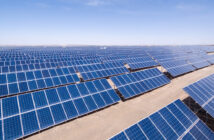
Solar photovoltaic (PV) technology remains the dominant force in South Africa’s renewable energy landscape, representing 121 GW of the total development pipeline — a sharp increase from 76 GW recorded in 2024.
Related news: SolaX Power wins TÜV Rheinland “All Quality Matters” award for excellence in utility string inverters
Wind projects also continue to gain ground, rising to 83 GW in 2025 from 49 GW last year, while battery storage projects surged to 82 GW from 44 GW. Most battery systems are designed for four hours of storage, with many integrated into hybrid solar facilities.
Of the total pipeline, around 72 GW are considered “Type A” projects — developments that have completed feasibility studies and environmental approvals and could reach commercial operation within three years if grid access is secured.
The Northern Cape once again emerged as the most active region, accounting for 48 GW of the total pipeline. Other high-growth regions include Hydra Central (31 GW), Free State (27 GW), Mpumalanga (21 GW), Eastern Cape (21 GW), and Western Cape (20 GW). While most provinces saw growth, Gauteng recorded a modest 7 GW, with KwaZulu-Natal registering 4 GW.
The results, NTCSA said, will soon be available on its website, providing policymakers, investors, and developers with a detailed snapshot of South Africa’s accelerating clean energy transition.
Author: Bryan Groenendaal