- South Africa’s state owned enterprises received more than R520 billion in government support between 2008 and 2023.
- New analysis finds weak links between board remuneration and operational performance at major SOEs.
- OUTA calls for governance reforms to align board pay with measurable outcomes and stronger accountability.
A new report by Organisation Undoing Tax Abuse has highlighted significant weaknesses in the governance of board remuneration across South Africa’s state owned enterprises, raising concerns about accountability and the effective use of public funds.
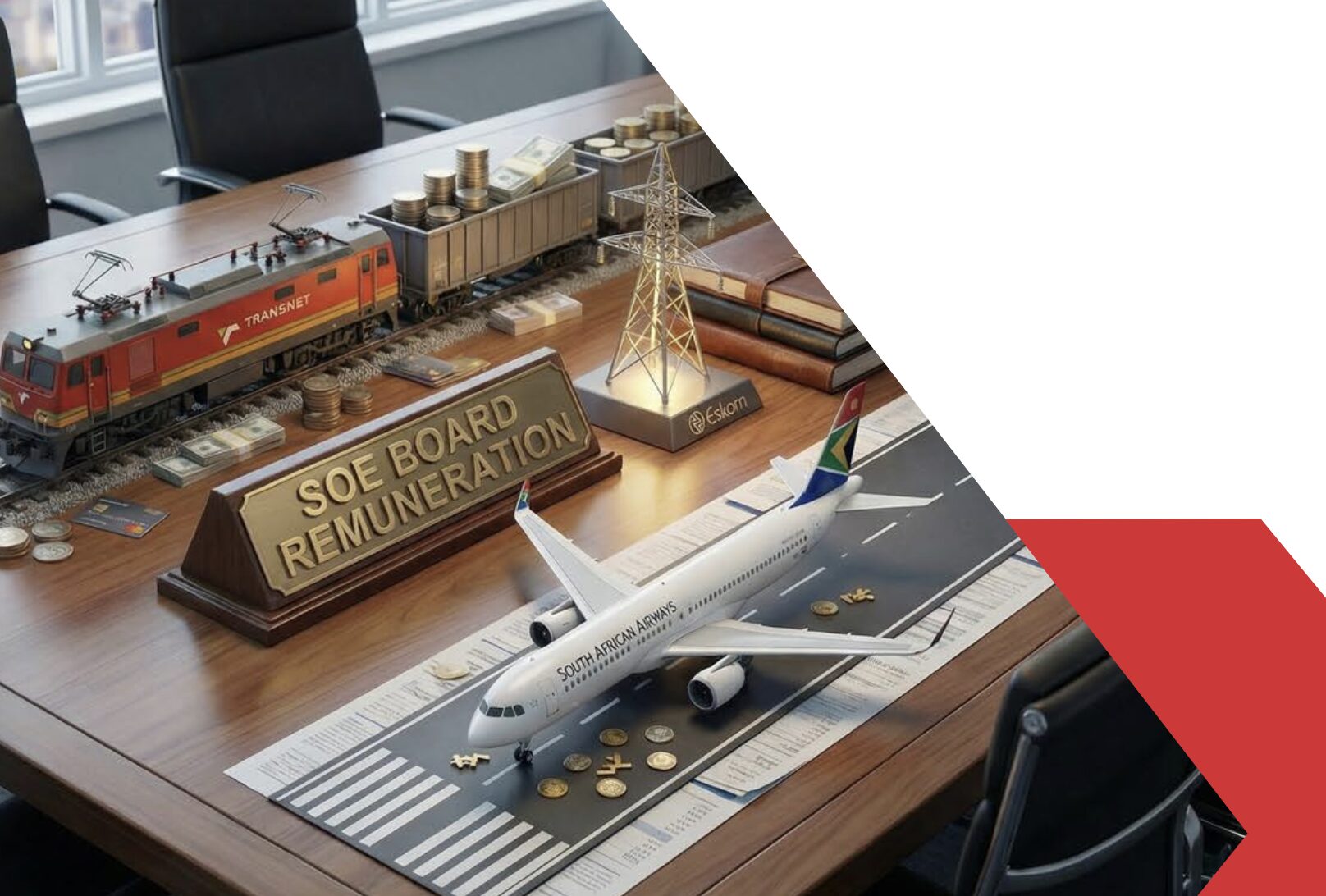
The report, titled Enhancing Board Remuneration Governance in South African Public Institutions: A Comparative Analysis, examines pay practices at major SOEs including Eskom, Transnet and South African Airways. It finds that remuneration for non executive board members is often only weakly linked to measurable performance indicators and remains inconsistently transparent.
According to the report, South Africa’s SOEs received more than R520 billion in government support between 2008 and 2023. Despite this level of financial intervention, there is limited evidence that remuneration for boards and executives is consistently aligned with operational recovery, financial stability or improved service delivery.
The organisation argues that the current system places the financial burden on taxpayers while boards rarely face consequences when institutions fail to meet performance expectations.
“South Africans have watched SOEs collapse while executives and board members continue to receive generous remuneration,” said Robyn Pasensie, Parliamentary Project Manager at OUTA. “This is not about cutting pay. It is about linking remuneration to clear measurable outcomes. If performance declines, pay must reflect that reality.”
The report benchmarks South Africa’s governance framework against international practices in countries including New Zealand, Canada and India. While South Africa has formal regulatory frameworks in place, the study concludes that enforcement mechanisms are weaker and governance structures are more exposed to political influence.
OUTA says remuneration structures should be directly linked to governance standards, measurable performance outcomes and transparent reporting. The organisation argues that when SOEs deteriorate under board oversight there should be clear accountability.
The report forms part of OUTA’s broader governance reform programme and will support its continued collaboration with Konrad Adenauer Stiftung during 2026.
Planned activities under the programme include policy position papers containing legislative proposals and structured engagement with Parliament and oversight bodies to strengthen governance practices.
According to OUTA, reforming remuneration governance is critical to improving fiscal discipline and restoring confidence in state institutions. The organisation maintains that aligning pay with performance is a necessary step toward protecting public funds and strengthening accountability across South Africa’s SOE sector.
A copy of the report can be found HERE
Author: Bryan Groenendaal