


Open-Ed
- The vast majority of indigent and other poor households served by City Power, the municipal electricity distributor for the City of Johannesburg, are in for a nasty surprise, with massive cost increases from 1 July 2024.
- This if the National Energy Regulator of South Africa (NERSA) approves the new electricity prices applied for by City Power…
On average, typical indigent households – the poorest-of-the-poor in Johannesburg – use about 200 kWh of electricity per month, and with effect from 1 July 2024 such households are facing an increase of some 60% for this very low amount of electricity. Poor households using 300 kWh of electricity per month are facing an increase of 45%.
This is as a result of major structural changes in prepayment meter electricity tariffs and tariff rates approved by the Council of the Johannesburg Metropolitan Municipality, and submitted to NERSA for approval for implementation from 1 July 2024.
In particular, for its so-called Residential Prepaid High tariff (which is applicable to the vast majority of indigent and poor customers with prepayment electricity meters), in addition to price increases on its variable energy tariff rates of some 12.5% for the 2024/25 financial year, City Power has applied for an additional R230 fixed cost to apply per month.
City Power’s prepayment meter tariffs and tariff rates for the 2023/24 financial year, and those before the Regulator for approval for the 2024/25 financial year, are shown in Table 1 below:
| Tariff 1: Residential Prepaid Low | ||
| Variable costs (R/kWh including VAT) | From 1 July 2023 | From 1 July 2024 |
| Block 1 (0 – 350 kWh) | R2.41 | R2.55 |
| Block 2 (350 – 500 kWh) | R2.77 | R3.12 |
| Block 3 (> 500 kWh) | R3.15 | R3.75 |
| Tariff 2: Residential Prepaid High | ||
| Variable costs (R/kWh including VAT) | From 1 July 2023 | From 1 July 2024 |
| Block 1 (0 – 350 kWh) | R2.41 | R2.72 |
| Block 2 (350 – 500 kWh) | R2.77 | R3.12 |
| Block 3 (> 500 kWh) | R3.15 | R3.55 |
| Fixed costs (R/month including VAT) | From 1 July 2023 | From 1 July 2024 |
| Service charge | R0.00 | R80.05 |
| Capacity charge | R0.00 | R149.50 |
Table 1: City Power Residential Prepaid electricity tariffs and tariff rates for 2023/24 and 2024/25
The Residential Prepaid Low tariff is applicable to households in areas served by City Power that are currently formally registered as indigent and appear on the Indigent Register of the City of Johannesburg. The Residential Prepaid High tariff is applicable to all other households with residential single-phase prepayment meters in areas served by City Power.
According to the equitable share grant from National Treasury to the City of Johannesburg for free basic electricity, there are about 950 000 indigent households in the City of Johannesburg metropolitan area that should be receiving free basic electricity. The City of Johannesburg’s own data shows that about 670 000 households live below the LOWER bound poverty line. However, self-reported data by the City in the annual StatsSA non-financial census of municipalities further indicates that just under 30 000 indigent households are on the Indigent Register to receive free basic electricity.
This means that some 95 to 97% of all indigent households in the Johannesburg metropolitan municipal area are in fact not on the Indigent Register of the City, and therefore the Residential Prepaid High tariff applies, while only 3 to 5% of all indigent households qualify for the Residential Prepaid Low tariff and free basic electricity.
On average, a typical indigent household with a prepayment meter that is not on the Indigent Register (i.e. about 95% to 97% of indigent households) is estimated to use about 200 kWh per month. From Table 1, in 2023/24 this would have cost them 200 x R2.41 = R482 per month including VAT, while in 2024/25 this would cost them (200 x R2.72) + R80.50 + R149.50 = R774. This is a 60% increase in one year.
In 2022/23, a typical poor household with a prepayment meter that is not on the Indigent Register using 300 kWh per month would have had a cost of 300 x R2.41 = R723 per month including VAT, while in 2024/25 this would cost them (300 x R2.72) + R80.05 + R149.5 = R1046 per month. This is a 45% increase in one year.
Another way of looking at this is as follows:
Consider a typical indigent household that is not on the Indigent Register (i.e. about 95% to 97% of all indigent households in the Johannesburg metropolitan area) that previously spent say R500 per month on electricity. They would have received 500 / R2.41 = 207 kWh of electricity.
From 1 July 2024, when the same typical indigent household goes to the prepaid electricity vendor with R500, it will now only get (500 – 230) / R2.72 = 99 kWh electricity. This means that 95 to 97% of indigent households will on average get less than HALF the electricity per month in the 2024/25 financial year compared to what they were previously getting for the same R500 per month the year before.
My guess is that there are going to be between 640 000 and 920 000 indigent households in the Johannesburg Metropolitan Municipality served by City Power that will be very surprised and shocked, and maybe even a tad angry, if NERSA approves the City’s new prepayment electricity tariffs.
So, we are now waiting to see if NERSA will approve a 65% average electricity price increase for the poorest and most vulnerable of households in the City of Johannesburg with effect from 1 July 2024…
Author: Chris Yelland, EE Business Intelligence
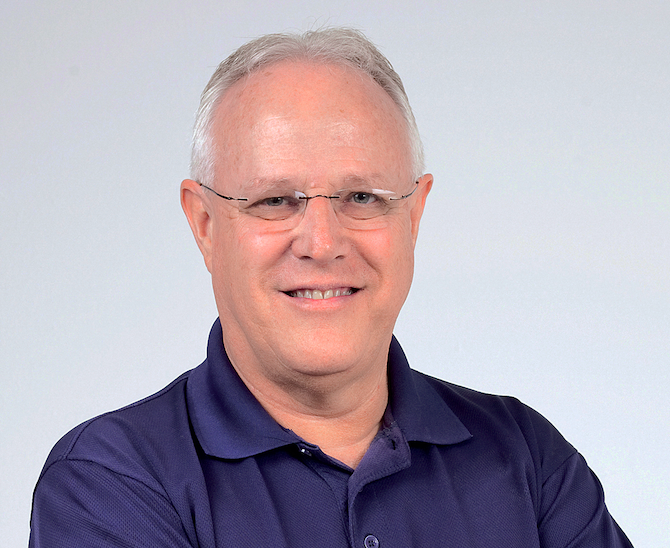
Mr Chris Yelland, managing director, EE Business Intelligence. Chris is an internationally respected energy analyst, consultant and electrical engineer. He is considered an expert on the South African energy market.
This article was originally published by EE Business Intelligence and republished with permission.
Disclaimer: The articles and videos expressed in this publication are those of the authors. They do not purport to reflect the opinions or views of Green Building Africa, our staff or our advertisers. The designations employed in this publication and the presentation of material therein do not imply the expression of any opinion whatsoever on the part Green Building Africa concerning the legal status of any country, area or territory or of its authorities.


