- Eskom continues to waive registration and connection fees of up to R10,000 for qualifying solar PV systems.
- Compliance requirements have been simplified to reduce cost and speed up approvals.
- Households and small businesses are urged to register to remain legal and safe.
- Uptake has been slow. Read more
Eskom has reaffirmed its commitment to supporting legal and safe solar adoption by extending financial and regulatory relief for customers with solar photovoltaic and other Small Scale Embedded Generation systems.
In an update issued on Wednesday, 14 January 2026, the utility said it is continuing to make it easier and more affordable for residential and business customers to comply with mandatory registration requirements under the Electricity Regulation Act.
Under Schedule 2 of the Act, all embedded generation systems below 100 kilovolt amperes must be registered with the relevant electricity network service provider, either Eskom or a local municipality, and must comply with applicable grid code standards.
The majority of residential solar installations are below 50 kilovolt amperes. Eskom confirmed that all registration and connection fees of up to R10,000, including the provision of a smart meter, remain fully waived for Eskom supplied household customers with systems up to this size until 31 March 2026.
Simplified compliance process
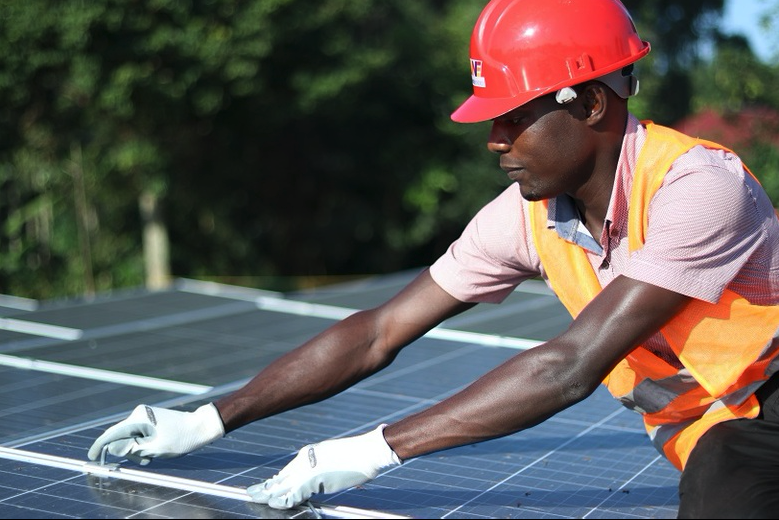
Since 1 October 2025, Eskom has significantly simplified compliance requirements following extensive engagement with industry stakeholders. Residential customers may now have their solar systems signed off by a person registered with the Department of Employment and Labour, excluding single phase testers. An Engineering Council of South Africa registered professional is no longer mandatory.
The change follows a review of safety and compliance requirements and a detailed due diligence process, ahead of anticipated updates to national wiring standards by the South African Bureau of Standards.
Eskom noted that registration of embedded generation systems is standard practice globally and plays a critical role in protecting customers, technicians working on the network and the stability of the broader electricity supply.
The utility is working with key national bodies, including the South African Bureau of Standards, the Department of Employment and Labour, the Association of Municipal Electricity Utilities Southern Africa, the South African Photovoltaic Industry Association, the Electrical Conformance Board and the Electrical Contractors Association of South Africa, to align and simplify rules across the country.
Who must register
Large embedded generation systems above 100 kilovolt amperes, typically installed by larger commercial or industrial users, must be registered directly with the National Energy Regulator of South Africa.
Systems below 100 kilovolt amperes, which include households and small businesses, must be registered with Eskom or the local electricity service provider. Eskom continues to provide up to R10,000 in support for systems under 50 kilovolt amperes.
Fully off grid systems that operate independently of Eskom supply are not required to register.
Required documentation
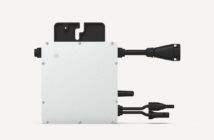
Customers are required to submit a valid Certificate of Compliance for electrical wiring, an inverter type test certificate to the NRS097 2 1 standard, and a Small Scale Embedded Generation commissioning test report. A twelve month grace period is allowed for submission of the commissioning report after registration.
Eskom has urged customers to act now to ensure compliance, remain legal and protect both their investment and the safety of the electricity network.
Quick Registration
- Use Eskom’s online Customer Application Tool to register: https://connect.eskom.co.za
For more information
- https://www.eskom.co.za/distribution/small-scale-embedded-generators-demo/ or call 0860 037 566.
- Electricity users who purchase electricity from a municipality are advised to contact them directly for any further guidance required.
Author: Bryan Groenendaal