- Municipalities such as Johannesburg and eThekwini are losing 35 to 50% of treated water through leaks as maintenance budgets are diverted, undermining service delivery and financial sustainability.
- Election year dynamics risk accelerating governance failures as incumbents focus on short term extraction rather than long term infrastructure management.
- Business leaders are calling for stronger vigilance from institutions, civil society and the private sector to prevent further deterioration in municipal services
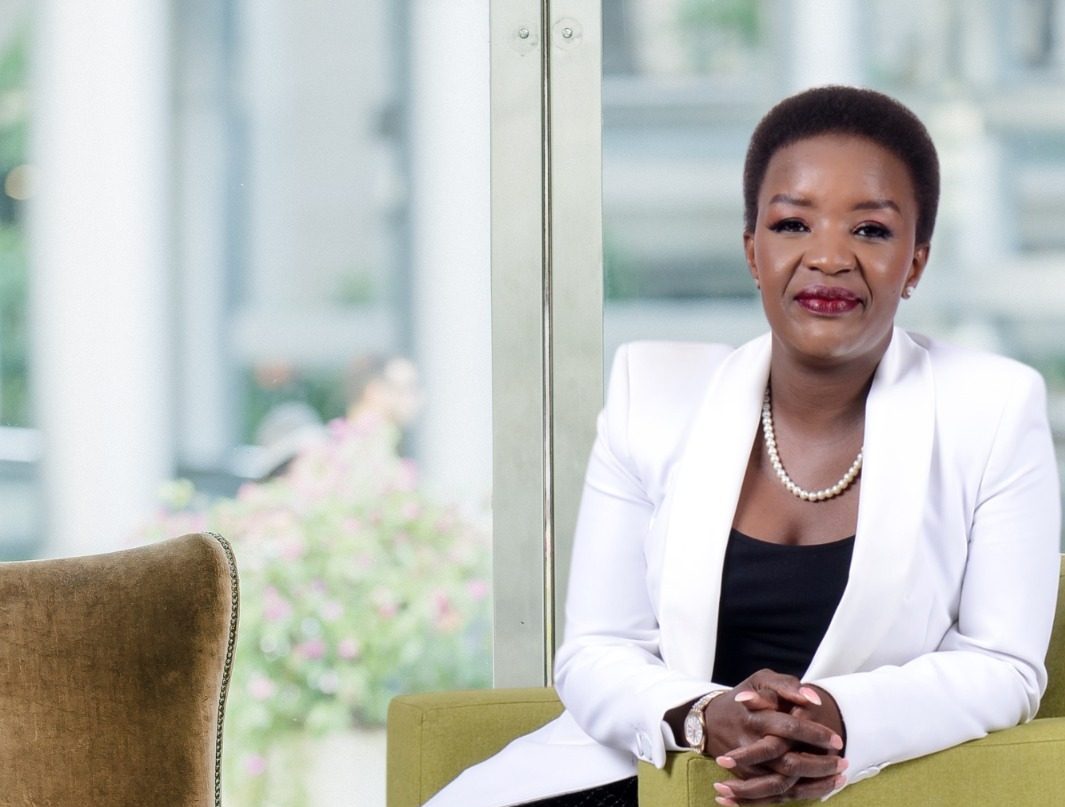
South Africa’s deteriorating municipal water systems are increasingly threatening economic stability as mismanagement and failing governance accelerate infrastructure decline, according to Business Leadership South Africa CEO Busisiwe Mavuso.
Speaking after recent comments by Sean Phillips, director general at the Department of Water and Sanitation, Mavuso warned that many municipalities are caught in what Phillips described as a “vicious downward spiral” in water service delivery.
In Johannesburg, the metro reportedly cannot afford to transport maintenance teams to repair leaks, while around 35% of treated water is lost through failing infrastructure. The situation is more severe in eThekwini, where water losses are estimated at about 50%.
Under South Africa’s municipal funding model, water services are intended to be financially self sustaining. Revenue generated from water sales should cover infrastructure maintenance and upgrades. Instead, those funds are increasingly diverted to other municipal expenses, leaving critical infrastructure without adequate upkeep.
The result is a growing risk to business operations across multiple sectors. Manufacturing facilities face potential production shutdowns due to unreliable water supply. Hotels and restaurants struggle with inconsistent municipal services. Commercial property owners face declining values when tenants cannot rely on basic infrastructure.
Agriculture also faces uncertainty where irrigation depends on municipal supply, while retail centres that rely on municipal water face operational disruption. At the same time, declining municipal finances often lead to higher service charges and tariffs even as reliability worsens.
According to the Auditor General of South Africa, only 41 of the country’s 257 municipalities achieved clean audits in the 2023 to 2024 financial year, highlighting widespread governance failures in local government.
Mavuso warned that political dynamics in election years may further worsen the situation. Political science research describes a phenomenon known as “lame duck looting”, where political leaders facing a high probability of losing power prioritise short term extraction over long term service delivery.
Infrastructure maintenance typically delivers benefits over time through improved reliability and service quality. However, where electoral prospects are weak, incentives may shift toward maximising short term gains while political authority still remains.
This behaviour risks accelerating infrastructure deterioration precisely when stability is most needed for economic growth.
One major metro offers a contrasting example. Cape Town, with a population comparable to Johannesburg, allocated a capital budget of R12.1bn in the previous financial year, compared with Johannesburg’s R7.1bn. The city is also the only metropolitan municipality to achieve a clean audit.
Cape Town’s water and sanitation directorate spent 94.1% of its capital budget, exceeding the combined capital spending of Johannesburg and eThekwini in this area. The higher spending levels have translated into stronger service delivery outcomes.
According to Mavuso, this contrast demonstrates that the current crisis is not inevitable but the result of governance and spending decisions.
South Africa already has several institutions designed to improve municipal governance. Accounting officers can be held personally liable for irregular expenditure, while the Department of Cooperative Governance and Traditional Affairs has prioritised improving local government performance under minister Velenkosini Hlabisa.
Reform initiatives such as Operation Vulindlela aim to ring fence municipal utility revenues to ensure funding is directed toward infrastructure maintenance. Meanwhile, the Special Investigating Unit has authority to investigate corruption through presidential proclamations.
However, many of these interventions focus on long term reform or on accountability after wrongdoing has already occurred.
Mavuso argues that the current situation requires more proactive oversight to prevent further damage to infrastructure and municipal finances. Civil servants remain responsible for lawful and appropriate spending regardless of political transitions, and oversight bodies including provincial treasuries, auditors, police and investigative agencies must remain particularly vigilant.
The media and investigative journalists also play an essential role in exposing emerging governance failures before they escalate further. At the same time, citizens retain the ultimate accountability mechanism through the electoral process.
Business, she said, also has an important role in supporting institutional capacity and governance improvements through collective action. Organisations such as Business Leadership South Africa are working with government to strengthen municipal capabilities, particularly in infrastructure development and maintenance.
Companies with significant local operations should also engage municipal leadership to ensure infrastructure maintenance remains a priority.
Without decisive intervention, the continued decline of municipal infrastructure threatens the wider economy. Failing water systems and unreliable electricity supply affect not only households but also the businesses that create jobs and generate the revenue needed to fund public services.
According to Mavuso, preventing further deterioration will require coordinated vigilance from civil servants, investigators, media, citizens and the private sector to safeguard the infrastructure that underpins South Africa’s economic activity.
Author: Bryan Groenendaal
About BLSA
BLSA is a business organisation that believes in South Africa’s future and shares the values set out in the Constitution. BLSA is committed to playing its part in creating a South Africa of increasing prosperity for all by harnessing the resources and capabilities of business in partnership with government and civil society to deliver economic growth, transformation and inclusion.