- BLSA rejects claims that its advocacy on Eskom transmission reform amounts to political interference.
- Business says independent transmission ownership is essential for good governance, investor confidence and a competitive electricity market.
- BLSA warns that delaying transmission unbundling risks undermining South Africa’s electricity reform agenda and investment pipeline.
Business Leadership South Africa (BLSA) has strongly defended its position on Eskom’s transmission restructuring, rejecting claims by Eskom board chair Mteto Nyati that its advocacy amounts to political interference or is driven by undisclosed interests.
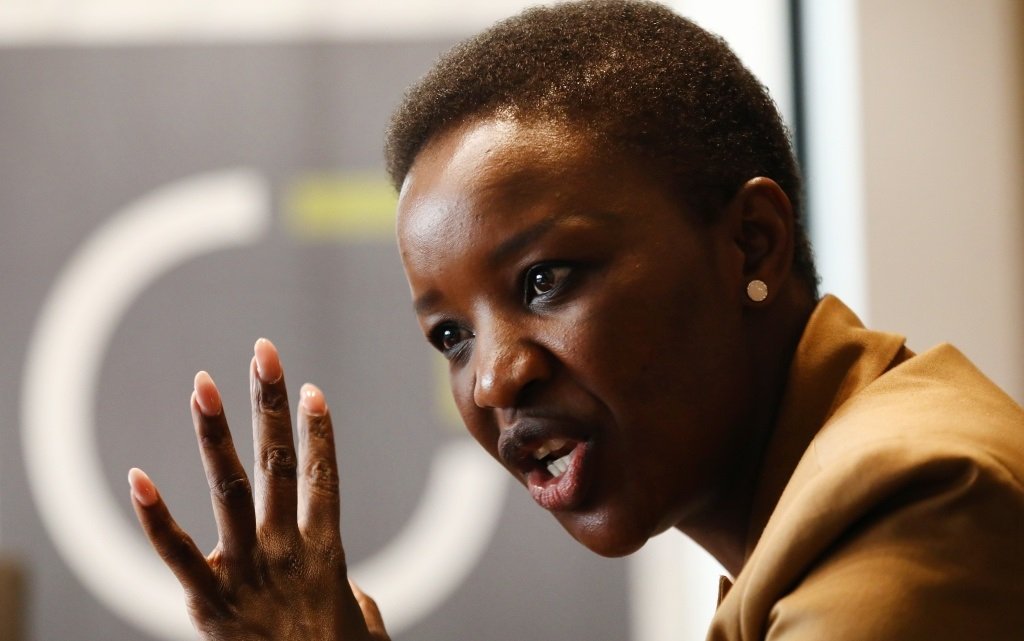
Responding to Nyati’s recent comments on social media and in a radio interview, BLSA CEO Busisiwe (Busi) Mavuso said the organisation’s position is based on legislation and government policy, arguing that implementing the agreed separation of Eskom’s transmission assets is a matter of good governance rather than political influence.
Mavuso said BLSA’s position has been publicly stated and is fully aligned with the Electricity Regulation Amendment Act as well as commitments made by President Cyril Ramaphosa. She said the President had confirmed during the February State of the Nation Address that the new Independent Transmission System Operator would own and control South Africa’s transmission assets, a position reaffirmed by the Presidency in June.
According to Mavuso, calling for Eskom to implement government policy cannot be equated with seeking preferential treatment.
“The essence of good governance is ensuring that public institutions implement the policies set by their shareholder and comply with the law,” she said.
Mavuso said separating transmission ownership from Eskom is intended to eliminate structural conflicts of interest by ensuring that the operator of the national electricity grid is independent from electricity generation.
She argued that an independent transmission company would be better positioned to provide fair and non discriminatory access to the grid for all electricity generators while giving investors greater confidence that access decisions would be impartial.
“The whole purpose of transmission reform is to remove conflicts of interest, not create opportunities for them,” she said.
Mavuso also rejected comparisons between BLSA’s public advocacy and private lobbying. She said the organisation’s positions are published openly through joint submissions with Business Unity South Africa, engagements with Parliament and the Presidency, and its public Reform Tracker.
“Transparency is what distinguishes legitimate policy advocacy from private influence,” she said.
BLSA also challenged Eskom’s continued support for retaining transmission assets within the utility.
Mavuso said the position outlined by Nyati reflects a proposal Eskom submitted in December but which was subsequently overturned by President Ramaphosa. She argued that a transmission operator without ownership of its assets would lack an independent balance sheet and therefore be unable to raise the estimated R440 billion required to expand South Africa’s transmission network.
She warned that continued dependence on Eskom would undermine the independence needed to support electricity market reform and attract private investment.
Mavuso said allowing Eskom to pursue a model that differs from agreed government policy raises legitimate governance concerns and risks slowing the development of a competitive electricity market.
She reiterated that BLSA remains supportive of Eskom and has acknowledged the operational improvements achieved under CEO Dan Marokane. However, she said that support cannot extend to accepting changes to government policy on transmission reform.
“Our position has always been public, consistent and grounded in law. We will continue to advocate for the full liberalisation of South Africa’s electricity market and for the implementation of the agreed transmission reforms without further delay,” Mavuso said.
Author: Bryan Groenendaal